

What if a cold patch on the floor doesn’t mean the whole heating system has failed? When the thermostat calls for heat but a room stays chilly, it’s easy to worry that repairs are needed. Troubleshooting underfloor heating problems starts with identifying whether the system is wet or electric, then checking a few straightforward settings.
You shouldn’t have to guess what’s safe to try. This guide explains common causes of uneven or weak heating, from control settings to possible system faults. It also sets out visible checks you can make without opening equipment or disturbing the floor.
You’ll learn which warning signs mean you should stop checking and seek qualified help. We’ll look at how symptoms can differ between wet and electric systems, what to note before arranging an assessment, and how underfloor heating and smart controls can be considered together. That gives you a clearer next step without jumping to conclusions.
Key Takeaways
- Use signs such as no heat, slow warm-up or uneven warmth as clues, not a diagnosis.
- Identify whether your system is wet or electric, as different components may be involved.
- For troubleshooting underfloor heating problems, start with visible checks and review the thermostat’s settings, schedule and displayed status.
- Match the symptom to possible causes, but don’t assume a fault is minor or attempt repairs inside the system.
- Note when the problem started and which areas are affected. Seek qualified help for persistent faults, suspected leaks, electrical concerns or unexplained shutdowns.
Troubleshooting underfloor heating problems: start with the symptoms
A cold floor is frustrating, but it doesn’t tell you exactly what has gone wrong. Treat what you can see and feel as clues, not a diagnosis. A thermostat that appears to call for heat, a room that warms slowly or a cold patch in one area can each have several possible explanations. Look for patterns before deciding what the fault is, because one symptom can point to more than one cause.
Describe the change as clearly as you can. Is the whole floor cold, or only part of it? Does the problem affect one room or several? Note when it happens, how long it lasts, any recent changes to the room or controls, and any message shown on the controller. This record can help distinguish a temporary change in comfort from a fault that needs assessment.
- No heat: the floor and room remain cool despite a call for heat.
- Slow warm-up: warmth takes longer than you expect to notice.
- Uneven warmth: some areas feel warmer than others.
- Controls seem unresponsive: the display, buttons or heating response don’t appear to match your settings.
What does an underfloor heating problem look like?
A completely cold floor is different from a local cold patch. If the whole floor feels cool, note whether the room itself is warming. If one area feels colder, mark where it is and whether the boundary stays in the same place. Slow warm-up is different again: the room may be gaining warmth gradually even if the floor doesn’t feel hot underfoot.
Floor coverings, room conditions and system settings can all affect how warmth feels at the surface. A cooler-feeling floor doesn’t automatically mean the heating has stopped working. For an overview of how underfloor heating systems work, remember that heat is delivered through the floor rather than from a radiator in the room.
Keep a simple note of the affected rooms or zones, when the change began, whether it follows a schedule, and any visible controller message. Record recent changes too, such as altered settings or work in the room. Don’t adjust advanced settings to test a theory.
When should you stop checking and seek help?
Keep your checks to visible controls and settings. Don’t open electrical or heating components or try to inspect anything beneath the floor. Stop and seek qualified help if you notice a leak, burning smell, damaged controls or another electrical concern. These signs need proper assessment, not trial and error.
A brief change in how warm the floor feels may reflect room conditions or the system’s normal response. A problem that persists, keeps returning or affects heating across a zone deserves attention. Note what you observed and when, then share those details as part of a professional assessment. This is a sensible next step, not proof that the whole system has failed.
How wet and electric underfloor heating systems can develop different faults
The first useful step in troubleshooting underfloor heating problems is knowing which type of system you have. A wet system circulates warm water through pipes beneath the floor. An electric system uses heating elements installed beneath or within the floor construction. Both deliver heat from below, but the parts that may need checking differ.
A wet system moves heat through water-filled pipes; an electric system produces heat through electrical elements beneath the floor. That distinction matters. A room that stays cool could relate to controls in either system, but the components considered during an assessment differ. The symptom alone can’t confirm which part, if any, has failed.
How a wet underfloor heating system works
In a wet system, warm water travels around pipe loops beneath the floor. A manifold, usually a central point where the loops connect, distributes the water to different rooms or zones. Room thermostats can signal for heat, while actuators at the manifold open or close the flow to their respective loops.
The heat source may be a boiler or another source, depending on the home. If one room isn’t warming, the relevant checks may differ from those needed when several rooms are affected. An assessment can consider whether the issue relates to the room control, an actuator, the manifold, the heat source or another part of the system. These are diagnostic points, not DIY repair tasks. Don’t remove covers or adjust components to investigate.
For example, if one zone behaves differently from the others, that information may help narrow the assessment. If several zones are affected, the wider system or its heat source may also be relevant. Neither pattern proves a fault in a particular component.
How an electric underfloor heating system works
An electric system uses heating cables, mats or similar elements beneath or within the floor construction to generate heat. The room thermostat controls the call for warmth. Its visible settings and displayed status are useful clues, but they don’t prove that a heating element is faulty. The cause could lie elsewhere in the controls or electrical supply.
Check only what you can see on the thermostat, such as the selected room setting or any displayed message. Don’t open electrical controls, handle wiring or disturb the floor covering to look for an element. Identifying the fault can require appropriate testing by a professional, particularly if there are electrical concerns.
If you’re unsure which type is fitted, look for the installation paperwork or ask a household member who may know. Avoid lifting flooring or opening equipment to find out. A clear description of the rooms affected and how the controls behave can help focus an assessment.
Understanding the system type also helps make sense of smart controls. Everything Heating Ltd installs underfloor heating and smart thermostats. Its underfloor heating and smart control services can help when you’re planning an installation or control upgrade.
Underfloor heating problems compared: match the symptom to likely causes
A symptom can help focus an assessment, but it can’t confirm the cause on its own. The same cold room might involve different parts of a wet or electric system. Use the guide below to describe what you’re noticing and choose a sensible next step, not to diagnose or repair the system yourself.
| Symptom | Possible causes | Sensible next step |
|---|---|---|
| The whole floor or several rooms are cold | Settings or controls, a heat-source issue in a wet system, or a wider circulation or electrical fault | Check visible settings and status messages. If the problem persists, arrange professional assessment. |
| One room or zone is cold | Room-control or actuator issues, circulation or balancing concerns in a wet system, or a local electrical fault | Note which zones are affected and whether others heat as expected. |
| Heating responds slowly | Normal system response, room conditions, floor coverings or settings; a fault is also possible | Record when heat is requested and when the room’s warmth changes. |
| Controls appear inactive | Control settings, a power or communication issue, or a fault elsewhere in the system | Check the visible display and settings. Don’t open controls or alter installer settings. |
Why is only one room or zone cold?
If other areas heat normally, the issue may be limited to that zone. In a wet system, a room control, actuator, circulation or balancing issue could be relevant. In an electric system, a local problem may need specialist testing. Similar cold-room symptoms can therefore point to different checks depending on the system type. Don’t assume a single cold zone means a minor fault.
Why is the whole floor cold or slow to warm?
If several rooms are affected, visible settings, controls and, in a wet system, the heat source or circulation may be relevant. Slow response can also reflect the way underfloor heating warms a room rather than a fault. It may not feel as immediate as heat from conventional radiators. Note the settings and how long it takes for warmth to change, rather than repeatedly adjusting controls.
For troubleshooting underfloor heating problems, useful observations include whether the issue affects one zone or the whole home, whether the controls show a message, and whether the pattern changes over time. Share these notes as part of a professional assessment if the fault persists. They help direct the investigation without treating a symptom as proof of a particular cause.
If you’re considering a new system rather than investigating an existing fault, the underfloor heating installation cost guide covers installation context. It won’t identify the cause of a current fault, but it may help if you’re weighing up a future installation.
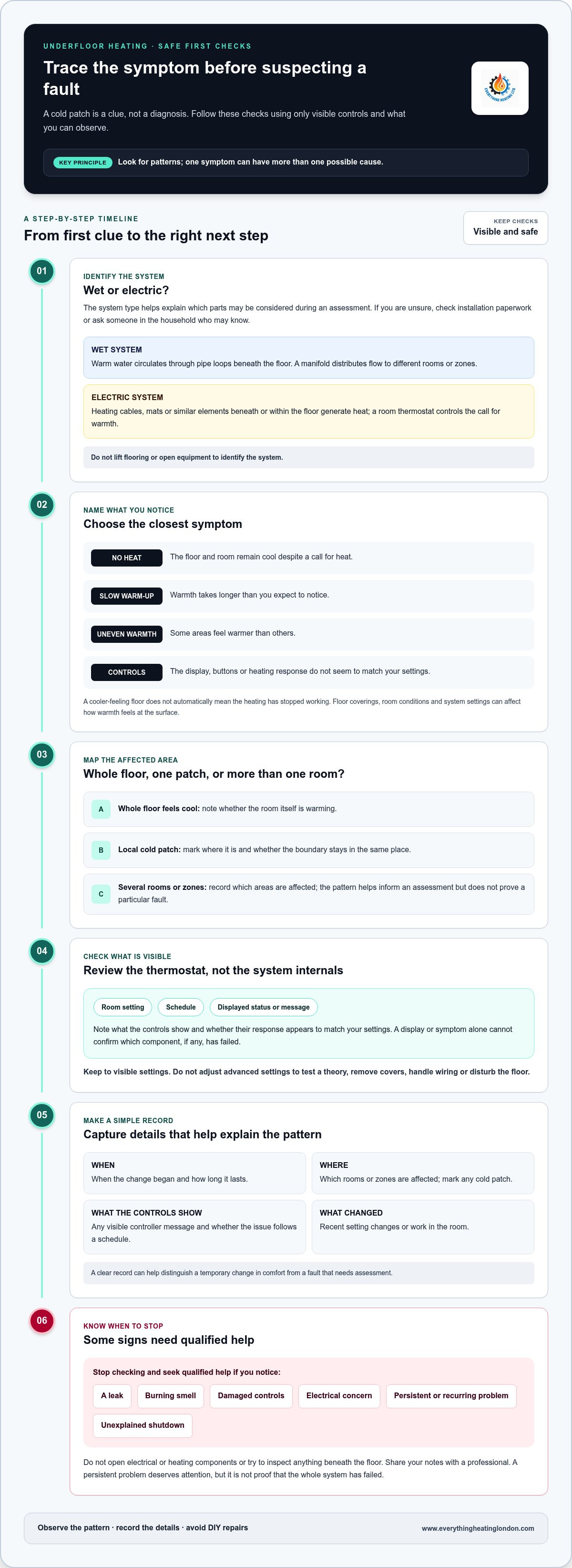
Safe first checks for underfloor heating problems at home
Keep initial checks simple and visible. You’re looking for useful clues, not trying to repair the system. Don’t remove covers, touch wiring or adjust installer-level settings. If you see a leak, smell burning or notice damaged controls, stop and seek qualified help.
Check the thermostat and heating schedule
Start at the room control for the affected area. Check that its displayed temperature, operating mode and schedule match what you intended. A room set to follow a programme may not be calling for heat at the time you expect. Note any message or symbol on the display rather than trying to interpret an unfamiliar fault code yourself.
Then follow this order:
- Look at the thermostat display. Check whether it’s on, readable and showing the affected room’s settings.
- Review the schedule and mode. See whether a timed programme, holiday setting or selected mode could explain the heating behaviour.
- Think about recent changes. Note whether the issue began after a schedule change, power interruption or control adjustment.
- Compare rooms or zones. Check whether other areas using the system are warming as expected.
- Observe the heat source if relevant. If your wet system uses a boiler, note any visible warning or heating issue, but don’t remove its casing or attempt internal checks.
Avoid factory resets or installer menus unless the manufacturer’s instructions for your control specifically support the action. Changing advanced settings can make it harder to understand the original problem. If the display seems unresponsive, record what it shows and leave the controls intact.
Check visible system conditions without dismantling anything
Look only at accessible areas. Check for visible water around equipment, unusual noises or warning messages. Don’t remove covers, investigate beneath the floor or handle electrical parts. If you find a leak, notice a burning smell or have an electrical concern, stop checking and seek qualified help.
London homes have varied layouts, so compare like with like where possible. Note whether the cold area is one room, several rooms on the same level or the whole home. Don’t assume the cause from the layout or age of the property. Your observations are more useful than a guess.
If the underfloor heating issue appears alongside a boiler warning or a wider loss of heating, the boiler repair guide for West London explains what to note about boiler symptoms. Keep your notes together: affected rooms, visible messages, settings and when the change began. These details can help focus a professional assessment and avoid unnecessary trial and error.
If the checks don’t explain the fault, discuss your underfloor heating needs with Everything Heating Ltd as a next step.
When to call a heating professional about underfloor heating problems
Stop DIY checks and seek qualified help if you suspect a leak, have electrical concerns, see damaged controls or notice a burning smell. Do the same if the system shuts down without a clear reason or a fault persists after you’ve checked the visible settings. Don’t open equipment, disturb the floor or keep changing controls to see what happens.
A professional assessment is also sensible when one zone repeatedly fails to warm, several areas lose heat, or the controls show a message you can’t explain. These symptoms don’t prove that a major component has failed. Further diagnosis should take account of the system type and relevant manufacturer guidance. Wet and electric systems have different components, so the checks needed won’t be identical.
What information helps a professional diagnose the fault?
A clear record can make an assessment more focused. Note when the problem began, which rooms or zones are affected, whether the system still heats elsewhere, and how the symptoms change over time. Include the thermostat’s displayed status or message, along with the settings shown when you noticed the fault.
Also mention recent changes. For example, note if you altered a schedule, adjusted a control or had work done around the heating system. Photos of visible controls or warning messages can be useful, provided you don’t remove covers or expose wiring. Keep your notes factual. There’s no need to guess which component is responsible.
What professional assessment can clarify
An assessment can help establish whether the issue relates to a room control, circulation in a wet system, the heat source or another system component. An electric system requires a different diagnostic approach. The aim is to identify what needs attention based on the installed system and its symptoms, rather than treating a cold patch or inactive control as a diagnosis.
Everything Heating Ltd installs underfloor heating and smart thermostats. This is relevant if you’re planning a new installation or control upgrade. For an existing fault, record the symptoms and keep internal checks to a suitably qualified professional. The appropriate next step depends on the system and what the assessment finds.
When troubleshooting underfloor heating problems, knowing when to stop is part of making a safe decision. Keep your notes and photographs ready, and leave internal checks to a professional. You’ll have a clearer account of what’s happening without risking further damage or disturbing the system.
Discuss your underfloor heating needs with Everything Heating Ltd to take the next step towards understanding the fault.
Take the next step towards comfortable, reliable heating
Good troubleshooting underfloor heating problems starts with useful observations, not guesswork. If the cause remains unclear, a professional assessment can help you decide what to do next and avoid changes that might complicate the fault.
Everything Heating Ltd installs underfloor heating and smart thermostats. If you’re planning an upgrade or want to discuss how your underfloor heating and controls are behaving, share what you’ve noticed and discuss the next sensible step.
Talk to Everything Heating Ltd about your underfloor heating system. Clear information and the right expertise can help you move forward with greater confidence.
Frequently Asked Questions
How long should underfloor heating take to warm up?
There’s no single warm-up time for every underfloor heating system. The response depends on the system, floor construction, settings and conditions in the room. It may feel slower than a radiator, so a short wait alone doesn’t confirm a fault. Compare what’s happening with the system’s usual pattern and its manufacturer guidance. If warmth doesn’t return or the behaviour has changed, note what you observe and arrange an assessment.
Can I bleed underfloor heating like a radiator?
No, don’t try to bleed an underfloor heating system by opening valves or adjusting the manifold unless its instructions specifically tell you to. Wet systems contain components that need correct handling, whilst electric systems have no water to bleed. If you suspect trapped air or poor circulation, describe the symptoms and affected areas during a professional assessment. For London homeowners, knowing whether the system is wet or electric can help guide the investigation.
What temperature should underfloor heating be set to?
There isn’t one temperature setting that suits every system, room or floor finish. Follow the guidance for your thermostat and flooring, and make any adjustments through the normal controls. The temperature shown for the room doesn’t necessarily match how warm the floor feels underfoot. If you can’t reach a comfortable room temperature using the usual controls, avoid changing installer settings and seek advice about what may be affecting performance.
Is it normal for underfloor heating to feel less warm than radiators?
Yes, an underfloor-heated floor can feel gently warm rather than hot, and the room may respond more slowly than it does with radiators. Floor materials, room conditions and system settings all affect how the warmth feels. A single cool spot isn’t enough to judge the whole system. Pay attention to whether the room itself remains cold or performance has changed from its usual pattern, then seek advice if it persists.
Can a smart thermostat cause underfloor heating problems?
Yes, a thermostat’s mode or schedule can affect when heating is requested, but that doesn’t prove the control is faulty. When troubleshooting underfloor heating problems, check that the displayed mode and programme match your intentions. If you use an app, compare its schedule with the thermostat display. Don’t change wiring or advanced settings. If the control appears correct but the heating response is unusual, have the controls and system assessed together.
Does underfloor heating need regular servicing?
Maintenance depends on whether the system is wet or electric, its components and the manufacturer’s instructions, so don’t assume one timetable applies to every installation. Keep the user information somewhere accessible and record any recurring changes in performance. Avoid opening electrical parts or adjusting a manifold. If you’re unsure which maintenance guidance applies, or the system develops repeated faults, seek advice from a suitably qualified heating professional.


