

Has the power flush worked if one radiator is still cool? It’s understandable to wonder whether your heating is ready to use, especially if the pressure changes, you hear air in the pipes or notice an unfamiliar noise. Knowing what to do after a power flush helps you check the system calmly without attempting repairs yourself.
A power flush clears sludge and debris from the heating system, but it can take time for heat to circulate and for you to see how the system performs. A radiator that warms slowly doesn’t automatically mean the flush has failed. Persistent cold spots, leaks, ongoing unusual noises or repeated pressure changes are worth noting.
This checklist explains what to observe as your heating runs, which changes need attention and when to arrange professional support. Follow the engineer’s handover advice, and don’t try to fix faults by adjusting components yourself.
Key Takeaways
- For what to do after a power flush, start with the engineer’s handover advice, then run the heating as instructed and check visible pipework.
- Give radiators time to warm before comparing rooms, and check boiler pressure against the manufacturer’s guidance.
- Note changes in heating, pressure and noise. Persistent unusual noises, leaks or cold spots need attention.
- Keep a simple record of room temperatures, pressure readings, noises and visible leaks during the first few days.
- If symptoms continue, arrange a professional assessment to identify whether the system needs further support.
What to do immediately after a power flush
Start with the engineer’s handover advice. Before changing any settings, check what they recommend for your boiler and heating controls. Run the heating as instructed, inspect visible pipework and note how the system performs.
These checks help you spot leaks or ongoing problems and see whether the heating is operating as expected.
Read the engineer’s handover notes first
Check what work was completed and whether any system settings were changed. Follow any specific instructions about running the boiler or using the heating controls before making adjustments. Keep the paperwork and engineer’s details together. If a symptom continues, the notes can help explain what was done and what you’ve observed since.
Run the heating and check visible areas
Use the normal controls and let the system circulate heat as instructed. Central heating systems distribute heat around the home, and this overview of central heating systems explains the basic idea. While the heating runs, look for visible drips around accessible radiators, valves and pipe connections. Don’t remove boiler covers or adjust internal components.
Keep to a straightforward sequence:
- Review the handover: Note the work completed and any instructions about the boiler or controls.
- Run the heating: Use the usual controls and allow time for heat to circulate.
- Inspect accessible areas: Look for drips around radiators, valves and visible pipe connections.
- Monitor performance: Note changes in heating, pressure readings or sounds without trying to fix components yourself.
Observe the system during normal operation, following the engineer’s instructions. This gives you a clearer picture than repeatedly switching the heating on and off or changing settings. If a radiator or room seems slow to warm, note it and compare how the rest of the system behaves.
If you spot a leak, hear persistent unusual noises or the heating isn’t working as expected, record what happened and when. Avoid tightening valves or altering boiler settings unless the handover instructions specifically tell you to. Clear notes can help a heating professional understand the issue if you need further support.
How to check radiators, boiler pressure and heating controls
Give the system time to circulate heat before deciding whether a radiator is still a problem. Use the heating as instructed, then compare radiators in different rooms. They won’t necessarily reach the same temperature at the same time. Look for a pattern: are the radiators warming, or does one stay noticeably cold while the others heat up?
Check radiator warmth and listen for changes
Note any radiator that remains cold or has a persistent cool area, and whether you hear repeated gurgling or banging while the system runs. A brief change in sound isn’t enough to diagnose a fault, but a noise that keeps returning is useful information for an engineer. If you’re considering bleeding a radiator, follow the power-flush engineer’s advice first. Don’t assume trapped air is the cause of every cold spot.
Monitor the pressure gauge and heating controls
Read the boiler manual for the correct pressure range for your appliance and instructions on checking it safely. As a general reference, most domestic combi boilers are set to around 1.0-1.5 bar when the system is cold, but the manufacturer’s instructions take priority. A pressure reading shows the system pressure at that moment. On its own, it can’t identify a leak, explain a cold radiator or confirm that the boiler is working correctly.
Check that the thermostat is set above the current room temperature and that the programmer or timer is set to call for heat. If the heating doesn’t start when expected, check those user settings first. Avoid changing unfamiliar boiler settings or repeatedly topping up the pressure. If the gauge is outside the range in the manual, changes repeatedly or you’re unsure what a control does, note what you see and seek professional advice.
For a useful follow-up, record which radiators warmed, where cold spots remain, any repeated noises and the pressure reading. Note whether the system was cold or running when you checked the gauge. This helps distinguish a one-off observation from a pattern that needs attention.
If the checks point to a continuing issue, a heating professional can assess the system rather than relying on a pressure reading or sound alone. Professional heating support in London can help you work out a sensible next step.
What is normal after a power flush, and what needs attention?
A first run that isn’t perfect doesn’t, by itself, prove the power flush has failed. Heat may take time to circulate, and a change in sound or radiator warmth needs to be judged in context. Follow the engineer’s handover advice, then note what happens, when it happens and which rooms are affected. This gives you a clearer basis for deciding what to do after a power flush.
Changes that may need monitoring
A brief change in circulation or an occasional unfamiliar sound may be worth watching, but don’t assume every noise or pressure change is harmless. Check the system only as instructed and compare the pressure with the range in the boiler manual. If a symptom repeats, worsens or consistently affects the heating, arrange professional advice rather than continuing to troubleshoot.
| Observation | Sensible first check | When to seek professional advice |
|---|---|---|
| One radiator warms more slowly or has a cool area | Allow time for heat to circulate, then compare it with other radiators. Note whether the same radiator stays cool. | If the cold spot persists or the radiator remains cold while others heat, ask for an assessment. |
| Gurgling, banging or another unusual sound | Notice whether it happens once or returns, and whether it comes from a particular radiator or area. | Seek advice if the noise keeps recurring or comes with poor heating performance. |
| Pressure reading changes | Check the gauge as directed in the boiler manual. Record the reading and whether the system is running or cold. | Get professional help if pressure repeatedly falls, remains outside the manufacturer’s guidance or you’re unsure what the reading means. |
| Water around a radiator, valve or pipe connection | Look for the visible source without dismantling or tightening components. | Visible leaks need attention. Contact a heating professional rather than attempting a repair. |
| Boiler stops operating or heating is repeatedly lost | Check only the user controls and handover instructions. Don’t open the boiler casing. | Arrange professional support, especially if the boiler continues to stop or heat loss persists. |
Signs that should prompt a call for help
Persistent loss of heat, visible leaks and recurring pressure problems should not be treated as routine settling. A boiler that stops operating, radiators that remain cold or repeated abnormal noises also warrant a professional assessment. Don’t open the boiler casing or attempt gas-related repairs. A heating engineer can assess how the system is operating and advise on suitable next steps.
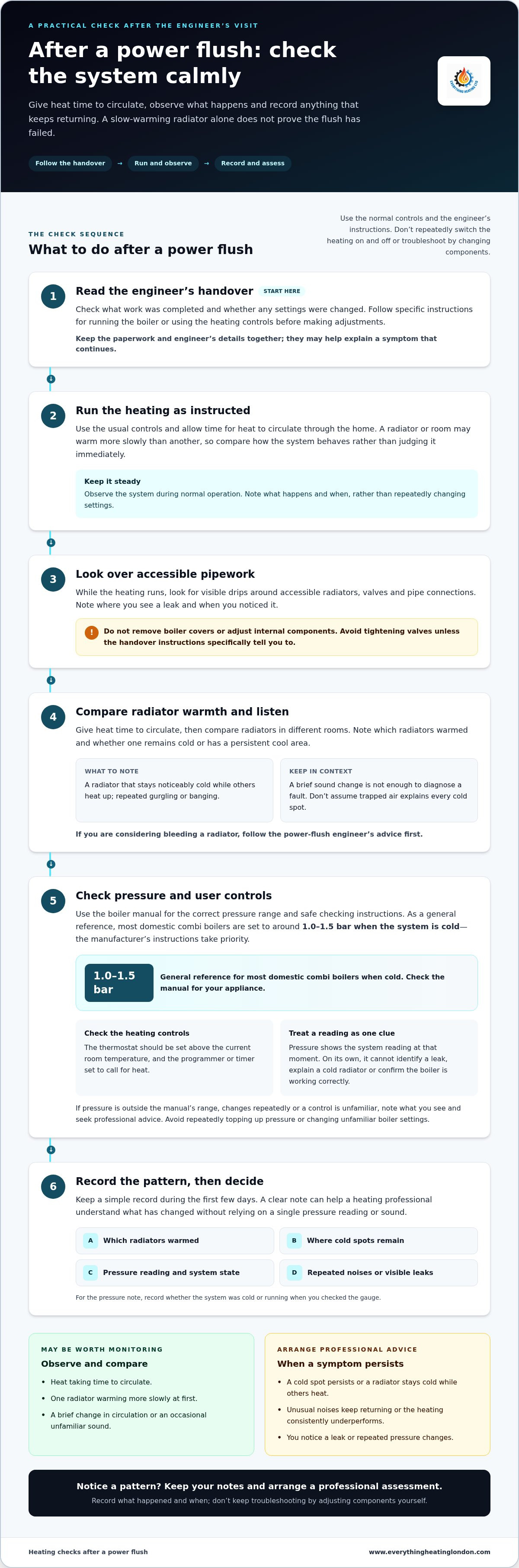
A simple checklist for the first few days after a power flush
A short, consistent record is more useful than repeated tests or adjustments. Follow the engineer’s handover advice, use the heating normally and note what you observe. This helps you see whether an issue is a one-off or keeps returning, and gives a heating professional clear details if you need follow-up.
During the first heating cycle
- Check the controls: Set the thermostat or programmer as you normally would and note whether the heating responds.
- Walk through accessible rooms: Record which radiators warm and which remain cool after the system has had time to circulate heat.
- Look for visible leaks: Check around accessible radiators and pipe connections. Don’t touch hot pipework or remove covers.
- Note anything unusual: Record repeated noises or any change in how the heating operates.
There’s no need to keep switching the system on and off to test it. Observe it during the heating cycle, following any specific instructions from the engineer.
Over the next few days
Repeat these checks during ordinary heating use. If you look at the pressure gauge, follow the boiler manual and write down the reading, along with whether the heating was on or off. Avoid topping up pressure repeatedly, balancing radiators or making other DIY adjustments. If the same symptom continues, contact a heating professional for advice.
A simple log can be brief. For each observation, note:
- Date and time
- Room and radiator: Include whether it warmed fully or stayed cool.
- Room temperature: Use the same thermometer and position if you’re comparing readings.
- Noise or leak: Describe what you noticed and whether it happened again.
- Pressure reading: Record the gauge reading and whether the system was running or cold.
This record can help a heating professional understand what is happening without relying on repeated tests. If heat loss, leaks or recurring pressure changes continue, don’t rely on more DIY checks to resolve them. Arrange professional power-flushing support in London to discuss a suitable next step.
When to arrange professional power-flush follow-up in London
A single slow radiator or unfamiliar sound on the first run may not tell you whether anything is wrong. Arrange a professional assessment if symptoms persist during normal heating use, return repeatedly or affect how well your home heats. Visible leaks, repeated pressure loss and a boiler that keeps stopping need attention. Further DIY adjustments can make it harder to identify the cause, so stop troubleshooting and share what you’ve observed.
An engineer can assess how the heating system is operating and advise on suitable next steps. A power flush removes sludge and debris, but it won’t correct every possible fault. If a problem continues, an assessment can help establish whether it relates to circulation, a component or another issue. The right next step depends on how the system is behaving, not just one gauge reading or one cool radiator.
What information to have ready
Before arranging support, gather the details you’ve recorded. Note when the flush took place and what the engineer advised afterwards. List the radiators or rooms affected, describe any visible leaks or unusual noises, and include pressure readings that have changed repeatedly. If you can readily find the boiler make and model, have those details available too. Don’t remove covers to look for them, and don’t delay urgent safety action to collect information.
If you suspect a gas escape or another immediate safety risk, follow the appropriate emergency guidance straight away. Don’t wait to speak to a heating professional or assemble paperwork first.
Getting heating support in London
Everything Heating Ltd provides professional power flushing and heating services in London. The company is Gas Safe registered, a relevant trust point for gas-heating work. If the checks in this guide haven’t resolved your concern, a professional assessment can help clarify what may be affecting the system and what support is appropriate. You don’t need to diagnose the fault yourself before asking for help.
You now have a practical answer to what to do after a power flush: follow the handover advice, observe how the system behaves and keep a clear record of persistent symptoms. If you’re still concerned about ongoing cold radiators, leaks, pressure changes or boiler operation, contact Everything Heating Ltd for heating support.
Keep your heating checks simple and safe
Knowing what to do after a power flush comes down to following the engineer’s handover advice, checking how the heating performs during normal use and noting anything that persists. A radiator that warms slowly on one occasion doesn’t prove the flush has failed, but recurring cold spots, visible leaks or repeated pressure problems deserve professional attention.
Don’t dismantle components or make repeated adjustments to try to find the cause. An engineer can assess how the system is operating and advise on suitable next steps. Everything Heating Ltd provides professional power flushing in London and is Gas Safe registered for gas-heating work.
If symptoms continue, take your notes and arrange professional heating support in London. Clear observations and professional advice can help you decide what to do next.
Frequently Asked Questions
How long should I wait before using the heating after a power flush?
Use the heating when the engineer says it’s ready, and follow their handover instructions before switching it on. There isn’t one waiting period that applies to every system, as the work completed and appliance instructions can differ. Once advised, use the normal thermostat or programmer controls and give radiators time to warm. If you’re unsure, refer to the handover notes or contact the engineer rather than changing boiler settings.
Should radiators feel warmer after a power flush?
Radiators may heat more evenly if sludge or debris was restricting circulation, but results depend on the system and its condition. Give the heating time to circulate before comparing rooms. A radiator that warms slowly on one occasion doesn’t automatically mean the flush has failed. If the same radiator remains cold or has a persistent cool area during normal use, note what you observe and arrange professional advice.
Is it normal for a boiler pressure reading to change after a power flush?
A pressure reading can vary, so check it against the guidance for your specific boiler and note whether the system is cold or running. Most domestic combi boilers are typically set to around 1.0-1.5 bar when cold, but the manufacturer’s instructions take priority. A reading alone can’t diagnose a leak or other fault. Seek advice if pressure repeatedly falls or is outside the specified range.
Can I bleed radiators straight after a power flush?
Don’t bleed radiators automatically straight after a power flush. Follow the engineer’s handover advice first, as they may give specific instructions for your system. If a radiator stays cool or you hear persistent gurgling, record which radiator is affected and when it happens. Bleeding can affect system pressure, so don’t proceed if you’re unsure how to do it safely or how to check the pressure afterwards.
What should I do if a radiator is still cold after a power flush?
Give the heating time to circulate, then compare the radiator with others and note whether it is entirely cold or has a cool area. Knowing what to do after a power flush doesn’t mean trying to fix every symptom yourself. A single slow radiator doesn’t prove the flush failed, but if it stays cold during normal use, arrange a professional assessment. Don’t dismantle valves or make repeated system adjustments.
Why is my heating making noise after a power flush?
Some sounds may relate to changes in circulation, but persistent or repeated noises shouldn’t be dismissed as harmless. Note whether you hear gurgling, banging or another sound, when it occurs and which radiators or rooms are affected. Check the engineer’s handover advice and avoid adjusting unfamiliar boiler controls. If the noise keeps returning, worsens or comes with poor heating performance, contact a heating professional for an assessment.
When should I contact a heating engineer after a power flush?
Contact a heating engineer if you have a visible leak, repeated pressure loss, persistent cold radiators, recurring unusual noises or a boiler that keeps stopping. Share when the flush took place, what the engineer advised and the symptoms you’ve recorded. Everything Heating Ltd provides professional power flushing and heating services in London and is Gas Safe registered. An engineer can assess how the system is operating and advise on suitable next steps.


