

What if the noise in your heating pipes isn’t coming from the pipes at all? A bang as the system starts, a gurgle near a radiator or a rumble from the boiler can point to different causes. If you’re looking for a noisy central heating pipes fix, the sound and when it happens are useful clues.
It can be unsettling when the noise returns every time the heating switches on or off, particularly if you’re unsure what’s safe to check yourself. A few low-risk observations may help you spot a pattern. Persistent or worsening noise, especially from the boiler, needs professional attention.
This guide explains what common heating noises can mean, how to narrow down the likely cause and which checks you can make safely at home. It also covers what to avoid and when to call a Gas Safe registered heating engineer. If system contamination is suspected, an engineer can assess whether professional power flushing is appropriate. It isn’t a fix for every noisy pipe.
Key Takeaways
- Use the sound and when it occurs as clues, not as a definite diagnosis.
- Note where the noise comes from and whether heating performance changes before trying a noisy central heating pipes fix.
- Limit checks to accessible pipework. Don’t lift flooring or open the boiler casing.
- Persistent banging, leaks or unusual boiler behaviour are reasons to arrange professional investigation.
- A heating engineer can assess the system and recommend a repair or, if contamination is found, power flushing.
Noisy central heating pipes: what the sounds can tell you
A noise from your heating system can be unsettling, but it doesn’t point to one fault on its own. Pipes can tick, bang, hum or gurgle for different reasons, and similar sounds can have different causes. “Noisy central heating pipes” describes sounds associated with water flow, trapped air, pipe movement or contact between a pipe and nearby surfaces.
In a typical system, water moves between the boiler and radiators through a network of pipes. Understanding how central heating systems work can put the sounds in context, but listening is only a starting point, not a diagnosis.
Note the sound and when it happens. These details can help narrow down the cause without turning a guess into a diagnosis.
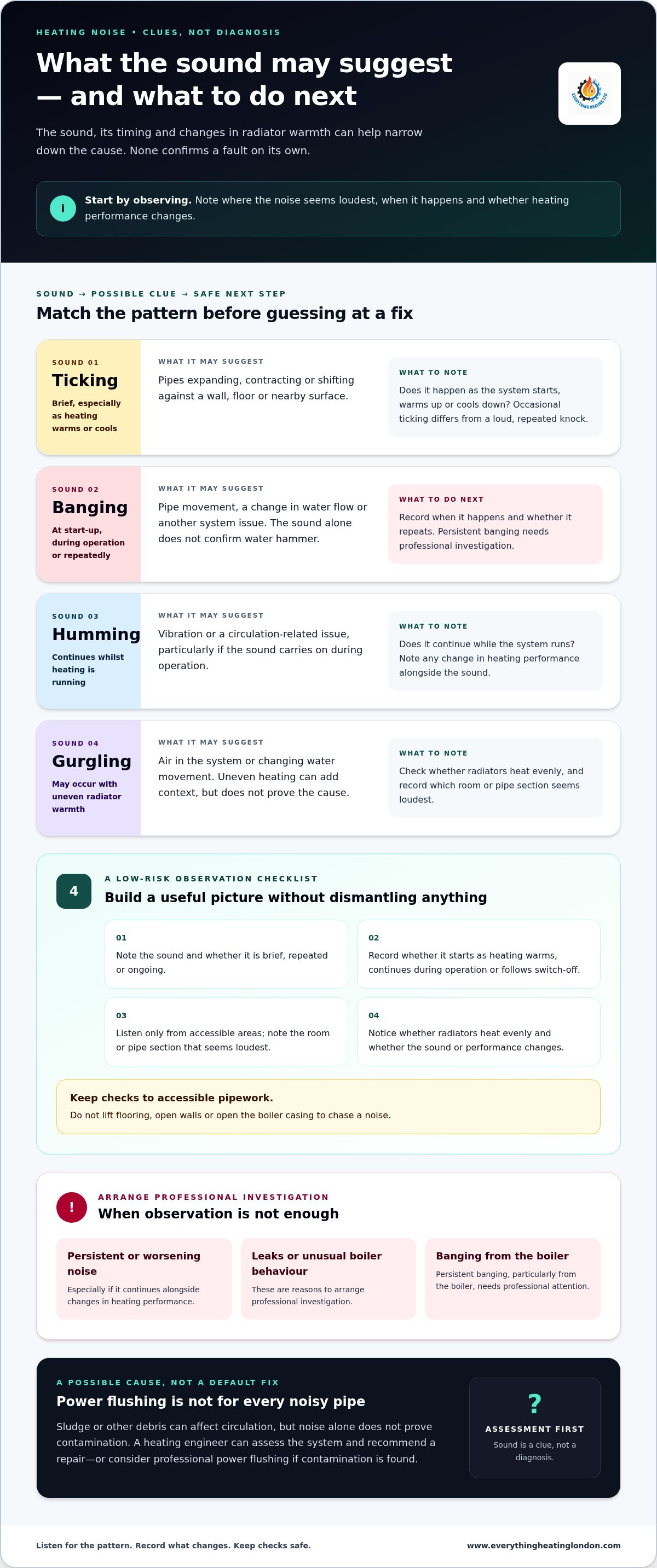
- Ticking: May happen as pipes warm, cool or shift against a wall, floor or another nearby surface.
- Banging: Can have several causes, including pipe movement or changes in water flow. The noise alone doesn’t confirm water hammer.
- Humming: May point to vibration or a circulation-related issue, particularly if it continues while the heating is running.
- Gurgling: Can suggest air in the system or changing water movement, especially if a radiator also heats unevenly.
What does ticking, banging, humming, or gurgling usually suggest?
A brief tick as the heating starts or cools down may come from normal expansion and contraction. Metal pipes change slightly as their temperature changes. If a pipe touches a joist, wall or floor, that movement can make the sound more noticeable. Occasional ticking is different from a loud, repeated knock or ongoing vibration.
Banging needs more context. It might relate to a pipe shifting, a change in water flow or another system issue, so don’t assume the sound proves a particular fault. Gurgling can be associated with air or water moving through the system. A steady hum may relate to vibration or circulation. Treat these as clues to record, not instructions to adjust system components.
When does the noise happen?
Pay attention to the heating cycle. Does the sound begin as the system warms up, continue while the heating is running, or start just after it switches off? A noise that follows temperature changes may be linked to pipe expansion or contraction. One that continues during operation may relate to flow or vibration. Timing helps identify patterns, but it can’t confirm the cause by itself.
Listen only from accessible areas. Note which room or section of pipe seems loudest, whether the noise travels, and whether it happens every time the heating runs. Check whether radiators heat evenly or one stays cooler than others. If the sound changes, record what changed and when. These details can help an engineer identify a noisy central heating pipes fix by comparing the sound with the system’s behaviour.
Why central heating pipes bang, tick, hum, or gurgle
The same noise can have more than one explanation. A tick might come from ordinary temperature changes or a pipe rubbing against a surface. A bang could relate to movement or changing water flow. Treat each sound as a clue, not a fault diagnosis.
The pattern matters. A brief tick as the heating warms up is different from repeated banging throughout a cycle. A hum that continues while the system runs is different from a short sound after it stops. Changes in radiator warmth or heating performance add useful context.
Sound, timing and heating performance together provide better clues than sound alone.
Pipe expansion, contact, and water flow
As hot water warms a pipe, the metal expands slightly. When it cools, it contracts. A pipe that touches a clip, joist or the edge of a floor opening may tick as it moves. If it rubs against a surrounding surface, the contact can carry sound through the structure, making the noise seem louder or further away than its source.
Water moving through the system can also become noisy if its flow is restricted or uneven. That doesn’t identify one particular fault. Pipes hidden beneath floors or behind walls make the source harder to pinpoint, so don’t lift flooring or open walls to chase a sound.
Air, circulation, and system debris
Air in a radiator or pipework may contribute to gurgling and uneven heating. You might notice a radiator warming differently from others, but that symptom alone doesn’t prove trapped air is the cause. A humming or vibrating sound may relate to circulation or the pump. If it persists or comes with a change in heating performance, arrange an assessment.
Sludge or other debris can affect circulation, but don’t assume it is present just because the system is noisy. It becomes a more relevant possibility when there are supporting signs, such as radiators that don’t heat evenly or a system that seems to circulate poorly. A heating engineer can assess the system before recommending work. General technical information from ASHRAE offers wider background on heating and building services, but can’t diagnose a fault in your home.
Use the pattern to guide your next step: note whether the sound is brief or repeated, where it seems loudest, and whether radiators heat as expected. If the noise persists alongside poor heating, a professional assessment can help establish whether the issue relates to pipe contact, air, circulation or system condition. For a noisy central heating pipes fix, Everything Heating Ltd provides boiler repairs and heating-system services in London. Arrange a heating-system assessment if the noise continues or performance changes.
How to diagnose noisy central heating pipes before trying a fix
Before changing anything, gather a few clear details about the noise. A short, safe check can help you spot a pattern and explain what’s happening if the system needs professional attention. Don’t try to identify a fault by opening the boiler or taking pipework apart.
A simple symptom and timing checklist
Work through these steps while observing from accessible areas only. Don’t lift flooring, open walls or touch hot pipes.
- Locate the sound. Note the room and whether it seems loudest near a radiator, an exposed pipe or the boiler. Sounds can travel, so treat the location as an estimate.
- Note the timing. Record whether it starts during warm-up, continues while the heating runs, or follows shut-off. Include how long it lasts and whether it happens each time.
- Check heating behaviour. Note whether one radiator or several areas are affected, whether radiators heat evenly, and whether rooms reach their usual warmth.
- Record changes. Note any cold spots, repeated pressure changes shown on the boiler display, visible leaks or warning messages. Don’t alter settings blindly to see what happens.
If the noise is intermittent, keep a short log over a few heating cycles. For example, record “gurgling in the upstairs bedroom during warm-up” rather than simply “pipes noisy”. If air seems plausible, this guide to how to bleed radiators explains the usual radiator check. Follow it only if you’re comfortable doing so and can do it safely.
Which checks are safe for a homeowner?
Look from a safe distance for visible leaks or movement in accessible pipework. Don’t handle pipes to test whether they’re loose, especially while the heating is on. If you spot water, note where it is and whether it appears to be spreading. Don’t attempt to tighten fittings.
You can read the boiler display and write down any warning message exactly as shown. Note any pressure changes the display indicates, but don’t adjust the pressure or settings without knowing what the system requires. A warning or repeated change is useful information for an engineer, not a reason to dismantle the appliance.
Leave boiler casings, internal components, gas parts and pipe fittings alone. Don’t loosen joints or make changes to gas components. The aim is to observe, not repair. Keeping these checks low-risk also helps ensure the information you collect is useful.
A clear record can help you work towards a noisy central heating pipes fix. Share the sound, where it occurs, when it starts, what the radiators are doing and any visible changes. If the noise keeps returning or comes with leaks, warnings or poorer heating, arrange a professional assessment rather than continuing to experiment.
Safe fixes for noisy central heating pipes to try at home
Keep home checks simple. First, note whether the heating is working as usual: are rooms warming, and do the radiators behave normally? Then look at exposed pipework from a safe position. You’re checking for obvious contact, not trying to repair or reposition anything.
The right response depends on the cause. A light tick during warm-up may settle as the system reaches temperature. Persistent knocking or vibration needs a different approach. Don’t wedge pipes, force them away from a surface or tighten supports yourself. An accessible loose support may need professional attention, and pipework hidden in a floor or wall should stay undisturbed.
Low-risk checks for ticking or light vibration
Look for visible pipework touching a hard surface, such as a wall or the edge of a floor opening. Don’t pull, bend or clamp it, and keep clear of hot surfaces. Notice whether the noise happens only as pipes warm or cool, and whether it settles once the heating is running. Never insert objects into floors, walls or boiler openings to reach hidden pipes.
If the heating behaves normally and the sound is brief, note when it occurs rather than making adjustments. If the noise grows louder, continues throughout the cycle or changes into repeated banging, stop experimenting. A visible point of contact can help explain the sound, but it doesn’t prove that moving the pipe is safe or will solve it.
When bleeding a radiator may help
Gurgling or a radiator that heats unevenly can make trapped air one possibility, but neither symptom proves air is the only cause. If the signs seem to fit, use this separate guide to bleed radiators rather than attempting other system adjustments. Stop if you’re unsure about the process or can’t carry it out safely.
Check how the system behaves afterwards. If the gurgling or uneven heating remains, returns, or another fault appears, don’t keep repeating the same step. A professional can assess whether air is involved or whether circulation or another system issue needs attention.
Stop your checks straight away if the noise worsens, a leak appears or boiler behaviour changes, including a new warning on its display. Don’t open the boiler casing, loosen fittings or interfere with gas components. A noisy central heating pipes fix should address the cause, not just mask the sound. If safe checks haven’t helped, Everything Heating Ltd can help London customers with boiler repairs and heating-system issues.
Arrange a heating-system investigation if the noise persists or the system’s behaviour changes.
When noisy central heating pipes need a London heating engineer
Some pipe noises can be monitored, but persistent or worsening banging deserves attention, especially if the heating is no longer working as it should. Arrange an assessment if radiators repeatedly stay cold, rooms struggle to warm, water is leaking, or the boiler behaves unusually, such as stopping repeatedly or showing a new warning. These signs don’t identify one fault by themselves, but they suggest the system needs more than guesswork.
Which symptoms should not be ignored?
A leak needs prompt attention because water may damage surrounding surfaces and could signal a problem with the system. Recurring, severe banging or a boiler that keeps stopping should also be assessed rather than managed by repeatedly restarting it. Stop DIY work if the next step would involve opening the boiler, loosening fittings or altering gas components.
If you smell gas, leave the property and call the National Gas Emergency Service on 0800 111 999 from outside. Don’t operate electrical switches or use naked flames. If a carbon monoxide alarm sounds, leave immediately and get fresh air. If anyone feels unwell, call 999. Don’t re-enter until it’s safe to do so.
What a professional assessment can establish
A heating engineer can use the noise pattern and your notes to guide an inspection. They may check accessible pipe supports and contact points, how the heating operates, and whether symptoms suggest air, circulation problems or another change in system condition. Sharing when the sound starts, where it seems loudest and how radiators heat can help build a clearer picture.
The cause determines the next step. An engineer may recommend a repair, an adjustment or boiler servicing, depending on what the assessment finds. If system contamination is identified, professional power flushing may be considered. It isn’t a universal answer to pipe noise and shouldn’t be recommended just because a system is noisy. The guide to power flushing and central heating efficiency explains more about the process.
For a noisy central heating pipes fix that lasts, the underlying cause needs to be established first. Everything Heating Ltd is Gas Safe registered and provides boiler repairs and heating services in London. An assessment can help distinguish a pipe-support issue from a circulation or boiler problem and establish whether further work is appropriate.
Get help with a heating-system problem if the noise persists, worsens or comes with a change in heating performance.
Take the next step towards quieter heating
You don’t need to identify the fault yourself before asking for help. A clear note of what you hear and how the heating behaves gives an engineer a useful starting point. The right noisy central heating pipes fix comes from finding the cause, not trying a different adjustment each time the sound returns.
For persistent noise or a change in how your heating works, Everything Heating Ltd can help with boiler repairs and professional power flushing in London. Power flushing is considered when an assessment indicates system contamination, not simply because the pipes are noisy. The business is Gas Safe registered.
Get help with a heating-system problem and move forward with a clearer plan. Once the cause has been assessed, you can make a more confident decision about what to do next.
Frequently Asked Questions
Why are my central heating pipes making a banging noise?
Banging can come from changing water flow, pipes moving against nearby building materials, or another issue in the heating system. The sound alone can’t confirm which. Notice whether it happens as a tap or heating control is used, during a heating cycle, or after the system stops. If the bang is loud, repeated or accompanied by reduced heating, note the pattern and arrange an assessment rather than trying to secure hidden pipes.
Can noisy central heating pipes be dangerous?
The noise itself doesn’t necessarily mean there’s immediate danger, but it can accompany a fault that needs attention. Take a leak, repeated boiler stoppages or worsening banging seriously. If you smell gas, leave the property and call the National Gas Emergency Service on 0800 111 999 from outside. If a carbon monoxide alarm sounds, get everyone outside into fresh air and call 999 if anyone feels unwell.
How do I stop central heating pipes from ticking?
Brief ticking as the heating warms or cools may be caused by pipes expanding and contracting. If you can safely see exposed pipework, look for an obvious point where it touches a hard surface, but don’t pull, bend or wedge it. Note whether the noise settles once the system is warm. If ticking becomes persistent, louder or turns into repeated knocking, have the pipework checked instead of trying to alter supports.
Can trapped air make heating pipes noisy?
Yes, air moving through a radiator or pipework can contribute to gurgling. You may also notice a radiator that warms unevenly, such as a cooler area compared with the rest. These signs make trapped air one possibility, not a confirmed cause. If gurgling continues after a suitable radiator check, or the heating behaves differently, don’t assume more bleeding will solve it. The system may need a broader assessment.
Should I bleed radiators if my heating pipes are noisy?
Only consider bleeding a radiator if the symptoms make trapped air plausible, such as gurgling alongside uneven radiator warmth. A bang or tick on its own isn’t a reason to bleed every radiator. Follow a reliable step-by-step method and stop if you’re unsure or something unexpected happens. If the noise remains, returns quickly or heating performance changes, seek professional advice rather than repeatedly bleeding the system.
When should I call a heating engineer about noisy pipes?
Arrange an assessment if banging keeps returning or gets worse, the heating repeatedly loses performance, you find a leak, or the boiler stops or displays a warning. Keep a note of when the sound occurs and which areas are affected. For a noisy central heating pipes fix, a London heating engineer can use those details to guide checks and determine whether the issue needs repair or further investigation.
Can power flushing fix noisy central heating pipes?
It can help if a heating engineer finds system contamination is contributing to poor circulation or related symptoms, but it isn’t a general cure for noise. Ticking from pipe movement or a loose support, for example, may need a different response. The system should be assessed first so the recommended work matches the cause. Power flushing is a professional process, not a first step to try whenever pipes make a sound.


