
That black, muddy sludge sitting in your radiators is a silent thief. It steals efficiency and drives up your London energy bills every single month. Professional heating system sludge removal is often the only way to stop this internal corrosion from ruining your boiler. It's frustrating to turn the heating up and still feel a chill because the bottom of your radiator is stone cold. You shouldn't have to put up with a noisy, kettling boiler or monthly costs that don't match your actual comfort levels.
This straight-talking guide explains exactly how to restore your home's warmth and efficiency. We'll help you identify the warning signs of sludge buildup before they turn into an expensive emergency breakdown. You'll learn how clearing out the system restores heat flow and extends the working life of your boiler. We'll also cover the best ways to prevent the gunk from returning, ensuring your heating stays quiet and reliable for years to come. It's time to stop overpaying for a cold house and get your system back under control.
Key Takeaways
- Identify "black sludge" as magnetite corrosion that prevents your radiators from heating up properly and inflates your monthly bills.
- Recognise key symptoms of buildup like cold spots at the bottom of radiators and strange "kettling" noises coming from your boiler.
- Discover why professional heating system sludge removal through power flushing is more effective than DIY methods for restoring heat flow.
- Learn how to prevent future sludge buildup by using high-quality chemical inhibitors and installing a magnetic sludge filter.
- Understand how technical system optimisation can quieten your heating and significantly extend the working life of your boiler.
What is Heating System Sludge? (The "Black Gunk" Explained)
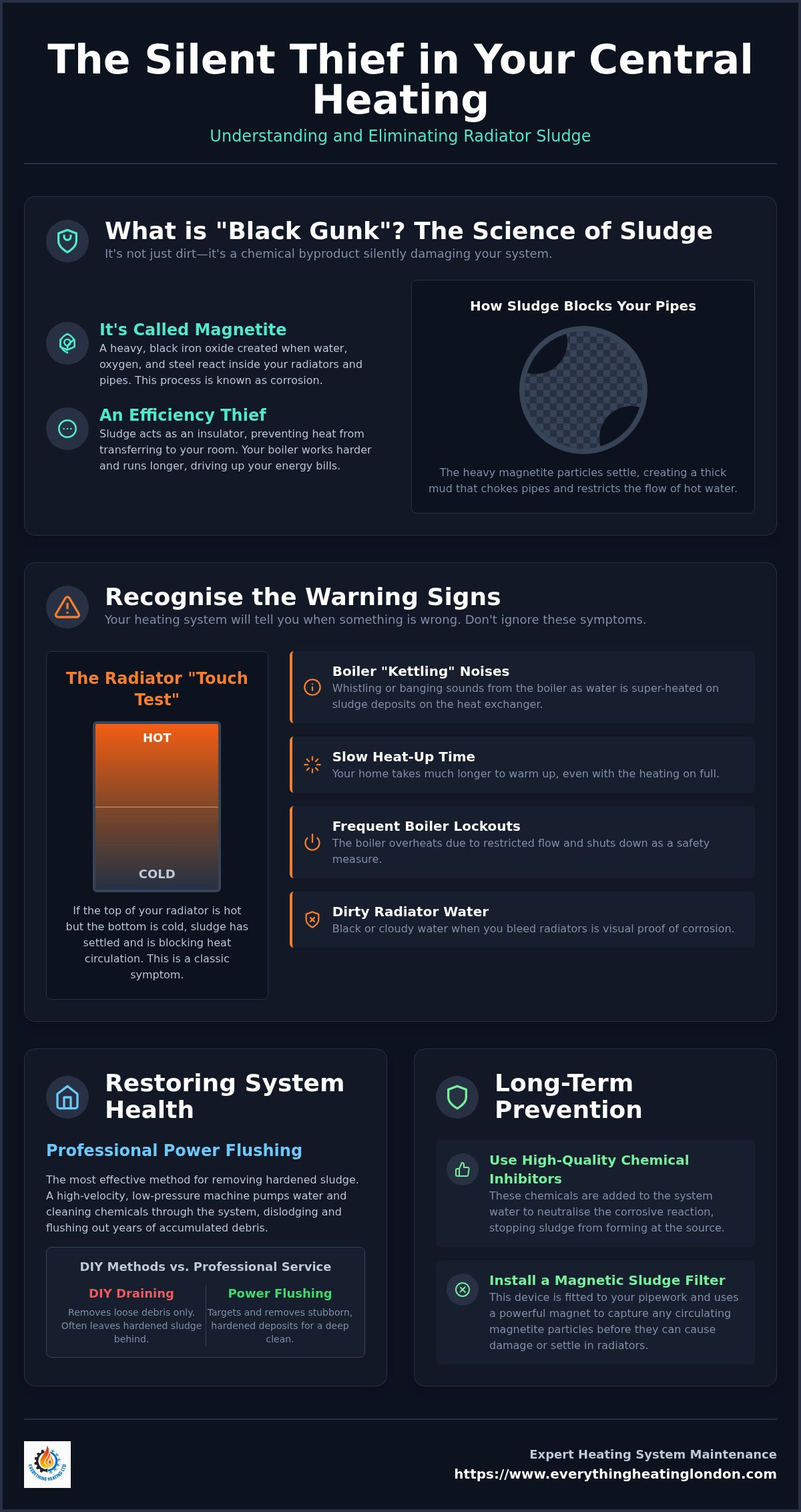
Most homeowners assume the "black gunk" inside their radiators is just dirt or old water. It isn't. It is actually a chemical byproduct called magnetite. This substance is a form of iron oxide that develops inside your central heating system over time. When water reacts with the steel inside your radiators, it triggers a chemical process called corrosion. Without the right chemical protection, this process creates heavy, black debris that circulates through your pipes. Eventually, it settles into a thick, mud-like substance that makes heating system sludge removal a necessity for home comfort.
London's water quality plays a significant role in this process. While "hard water" usually refers to limescale buildup, the high mineral content in London and the South East can accelerate the wear on internal system components. Limescale often acts as a structural trap for magnetite particles. This creates a stubborn, hardened mixture that is much more difficult to shift than standard debris. Because these particles are significantly heavier than water, they naturally sink. This is why you'll often find the thickest deposits at the lowest points of your system or settled firmly at the bottom of your radiators.
The Chemistry of Corrosion in Your Pipes
Oxidation happens whenever oxygen enters your closed-loop system. This often occurs through tiny leaks or during routine maintenance when fresh, oxygenated water is added. These black oxide particles are magnetic and incredibly fine. They travel easily into the delicate parts of your boiler. If your home uses older, non-barrier PEX piping, oxygen can actually permeate through the plastic walls. This constant "bleeding" of oxygen into the water keeps the corrosion cycle alive. It creates a never-ending supply of sludge that eventually chokes your heating flow.
Why Sludge is an "Efficiency Thief"
Sludge doesn't just sit there; it actively works against your heating. It acts as a powerful insulator. Instead of heat transferring from the water to the radiator's steel surface, it gets trapped behind a layer of mud. Your boiler has to run longer and hotter to achieve the same room temperature. This puts immense strain on your pump, which now has to push thick, heavy liquid through narrow pipes. It directly undermines the performance of a high-quality energy efficient boiler installation. It turns a modern, A-rated appliance into an expensive, struggling machine that costs more to run every single month.
Identifying the Symptoms: When to Organise Sludge Removal
Your heating system should work quietly in the background. When it starts making its presence known through odd noises or lukewarm radiators, it's usually trying to tell you something. Recognising the common signs of sludge early can prevent a minor efficiency drop from turning into a total system failure. You might find that the house takes significantly longer to warm up than it did last winter. This isn't just the weather getting colder; it's the sludge acting as a thermal barrier. Frequent boiler "lockouts" are another red flag. These happen when the heat exchanger becomes so restricted that the unit overheats and shuts down for safety. If you see cloudy or black water when you bleed your radiators, you have visual proof that corrosion is active inside your pipes.
The Radiator "Touch Test"
You can diagnose a sludge problem with a simple manual check. Turn your heating on and let it run for about fifteen minutes. Carefully run your hand across the surface of the radiator. If the top is cold while the bottom is hot, you simply need to bleed out trapped air. However, if the top is hot but the bottom is stone cold, sludge is the culprit. This heavy magnetite settles at the base, creating a physical dam that prevents hot water from circulating through the entire panel. Pay attention to the water colour during maintenance too. Clear water is healthy. Dark, inky water or gritty deposits mean heating system sludge removal is now a priority to protect your components.
Boiler Kettling and Pump Stress
A noisy boiler is a stressed boiler. "Kettling" is a term used for the whistling or banging sounds that occur when sludge settles on the heat exchanger. This layer of debris causes localised overheating, making the water boil and bubble like a kettle. This doesn't just sound annoying; it's physically damaging the internal metal. Simultaneously, the circulator pump has to strain to move this thickened, debris-laden water. A pump running under this much stress will eventually burn out or seize entirely. Neglecting these symptoms often leads to an emergency boiler repair West London. If your system feels sluggish or sounds like it's struggling, speaking with a Gas Safe registered expert can help you catch the issue before the heating fails completely.
Sludge Removal Methods: Professional Power Flushing vs DIY
It's tempting to look for a quick DIY fix when your heating starts to underperform. Many homeowners consider using a garden hose or over-the-counter chemicals to save money. However, there is a fundamental difference between rinsing a system and performing professional heating system sludge removal. A garden hose provides high pressure but very low flow. This might move loose dirt, but it won't lift the heavy, settled magnetite described in previous sections. Professional power flushing machines operate at high velocity but low pressure. This specific combination is designed to scour the internal walls of your pipes and radiators without damaging older joints or seals.
Attempting a DIY flush carries significant risks. If you dislodge sludge without a high-capacity machine to extract it, the debris often travels to the narrowest part of the system. This is usually the secondary heat exchanger inside your boiler. A DIY attempt can quickly turn a sluggish system into a total breakdown. For any intervention that involves opening the boiler casing or working on the gas-side components, you must use a Gas Safe registered engineer. It's the only way to ensure the work is safe and complies with UK building regulations.
What Happens During a Professional Power Flush?
During a professional service, the engineer connects a powerful pumping station to your system. We isolate each radiator one by one. This focuses the full flow of the machine on a single point, ensuring the velocity is high enough to dislodge stubborn deposits. The water passes through a large magnetic filter on the machine. You can actually see the black sludge being pulled out of your system in real-time. This process continues until the water runs completely clear and the system's pH levels are neutralised. It's a methodical, technical process that typically takes between 3 and 9 hours depending on the size of your home.
The Limits of DIY Chemical Cleaning
Chemical "sludge removers" you find in hardware stores are often a "plaster on a wound" for older systems. Pouring a bottle of cleaner into a header tank relies on the system's own weak pump to circulate it. If your radiators already have cold spots, the chemicals won't even reach the areas that need cleaning. These products are fine for routine maintenance on brand-new systems to keep them fresh. They are not a substitute for a mechanical flush when you already have established cold spots or boiler kettling. Relying on chemicals alone often just moves the problem around rather than solving it.
Prevention: Keeping Your Heating System Sludge-Free
Once you have invested in professional heating system sludge removal, the goal is to ensure the "black gunk" never returns. Prevention is significantly cheaper than a full system flush. It involves a combination of mechanical barriers and chemical protection. Think of it as an insurance policy for your boiler. Without these preventative measures, the corrosion process starts again the moment fresh water enters the pipes. Monitoring your system health through annual checks and modern technology is the best way to avoid surprise repair bills in the future.
Magnetic Filters: Your First Line of Defence
A magnetic filter is a small device installed on the return pipework just before the boiler. Brands like Adey or Fernox use high-strength magnets to pull magnetite out of the water flow. It catches the debris before it can enter the delicate heat exchanger. These filters are incredibly effective, but they have a finite capacity. They must be opened and cleaned during your annual boiler service. If left full, they can't protect the system. This simple maintenance task saves you thousands in long-term component replacements.
Chemical Inhibitors and System Balancing
Chemical inhibitors are the unseen heroes of a healthy heating system. They circulate in the water and create a microscopic protective film on all internal metal surfaces. This film stops oxygen from reacting with the steel, effectively halting the corrosion cycle. Over time, these chemicals dilute or lose their potency. We recommend testing the inhibitor levels every few years to ensure your protection is still active. Radiator balancing is also vital. By ensuring even flow to every room, you prevent stagnant spots where sludge is more likely to settle and harden.
Modern technology makes monitoring easier than ever. Smart thermostats can alert you if the system takes longer than usual to reach a set temperature. This is often the first sign of a drop in efficiency. When combined with a regular service schedule, these tools give you total peace of mind. If you want to ensure your home stays warm and your bills stay low, book a system health check with Everything Heating today. Our Gas Safe registered experts will assess your filtration and chemical levels to keep your heating running at peak performance.
Professional Sludge Removal in London: The Everything Heating Approach
Choosing a local expert for heating system sludge removal makes a real difference to the results you get. At Everything Heating Ltd, we've focused on technical system optimisation across London and Middlesex since 2018. We don't believe in corporate fluff or high-pressure sales tactics. Our approach is built on being "straight-talkers." We explain the technical state of your heating in plain English so you can make an informed decision about your home. You won't find any hidden costs or unnecessary parts added to your bill. We simply provide the technical expertise needed to get your heating back to its best.
One of the biggest concerns homeowners have about power flushing is the potential for mess. Black magnetite sludge is incredibly staining and difficult to clean if it spills. We take this seriously. Our engineers use professional-grade protective equipment and high-quality floor covers to ensure your home remains exactly as we found it. We use sealed, high-velocity pumping stations that keep the debris contained within the machine and your drainage system. It's a clean, clinical process that respects your space whilst delivering heavy-duty results.
Expert Power Flushing in Greenford and Uxbridge
We provide rapid response times for residents in Greenford, Uxbridge, and across West London. Because we are local, we understand the specific water quality issues and common system designs found in this part of the city. Transparency is at the core of our business. Many national companies are vague about their pricing until they are through your front door. We believe in providing clear information upfront, which is why local Londoners trust us for power flushing cost London clarity. When we perform heating system sludge removal in these areas, we use industry-leading chemicals and professional-grade equipment to ensure the job is done right the first time.
Restoring Your Comfort and Peace of Mind
The benefits of a professional flush are immediate and noticeable. You'll enjoy faster warm-up times and a house that stays warm even on the coldest London nights. Most importantly, you'll see the impact on your energy bills as your boiler stops struggling against internal blockages. Every job we undertake is handled by a Gas Safe registered engineer. We don't just clean the pipes; we ensure the entire system is operating safely and efficiently. If you're tired of cold radiators and noisy pipes, book a professional system health check today and let us restore your home's comfort.
Take Control of Your Home's Comfort
Ignoring the signs of magnetite buildup only leads to inflated energy bills and eventual boiler failure. You now know how to spot the cold spots and strange noises that signal a problem. Professional heating system sludge removal is a technical investment that pays for itself through improved efficiency and a quieter home. By combining a deep power flush with high-quality magnetic filtration and chemical inhibitors, you can break the corrosion cycle for good.
Everything Heating Ltd is here to provide the solution. As London-based heating specialists, we offer transparent, straight-talking advice that puts your comfort first. Our Gas Safe registered engineers focus on technical optimisation rather than up-selling unnecessary parts. We'll get your system running as it should, ensuring your house stays warm and your energy costs stay under control.
Book Your Professional Power Flush with Everything Heating and enjoy a more reliable, efficient heating system this winter. Peace of mind is just a quick health check away.
Frequently Asked Questions
Is heating system sludge removal messy?
Professional heating system sludge removal is not messy when performed by an experienced engineer. We use sealed power flushing machines that keep all the black magnetite contained within the equipment and your drainage system. Our team uses high-quality floor protectors and follows a strict process to ensure your London home remains clean. You won't have to worry about black spills because the entire process is self-contained and carefully controlled.
How much does professional sludge removal cost in London?
The cost of sludge removal in London depends on several factors, including the number of radiators in your property and the current condition of your pipework. Larger homes with more complex systems naturally require more time and specialised chemicals. Since every system is unique, we provide clear, straight-talking quotes after assessing your specific needs. This ensures you only pay for the work required to restore your system's efficiency without any hidden fees.
Can sludge damage my new boiler?
Yes, sludge can cause severe damage to a brand-new boiler. Most modern manufacturers require the system to be thoroughly cleaned and flushed before a new unit is installed to validate the warranty. If magnetite enters the narrow heat exchanger of a new boiler, it can cause overheating and premature failure. Protecting your investment with a clean system and a magnetic filter is the best way to ensure your new appliance lasts its full lifespan.
How long does a professional power flush take?
A professional power flush typically takes between 3 and 9 hours to complete. The exact duration depends on the size of your heating system and the severity of the sludge buildup. We spend time isolating each radiator to ensure every part of the system is cleared of debris. Our engineers work methodically to ensure the water runs completely clear and the pH levels are balanced before we finish the job in your home.
Will sludge removal fix my noisy boiler?
Sludge removal is highly effective at silencing a noisy boiler. The banging or whistling sounds you hear, often called "kettling," occur when debris settles on the heat exchanger and causes localised boiling. By clearing out this "black gunk," we allow water to flow freely and heat up evenly. This removes the stress on the internal components and the pump, resulting in a much quieter and more reliable heating system for your family.
How often should I have my heating system flushed?
Most experts recommend having your heating system professionally flushed every 5 to 10 years. However, this depends on the age of your radiators and whether you have a high-quality magnetic filter installed. If you notice cold spots at the bottom of your radiators or your boiler starts making unusual noises, it is a clear sign that you need a health check. Regular maintenance helps prevent the heavy buildup that leads to expensive repairs.
Can I remove sludge myself with a chemical cleaner?
You cannot effectively remove established magnetite sludge using over-the-counter chemical cleaners alone. These products are designed to loosen debris, but without the high-velocity flow of a power flushing machine, the sludge simply settles back into the bottom of your radiators. A mechanical flush is necessary to physically extract the heavy, magnetic particles from the system. Relying on DIY chemicals often leads to blockages in the narrow pipework or the boiler's heat exchanger.
What happens if I ignore the sludge in my radiators?
Ignoring sludge leads to higher energy bills and a significantly shorter lifespan for your boiler. As the magnetite builds up, your system has to work much harder to heat your home, which increases wear and tear on the pump and heat exchanger. Eventually, the buildup will cause a total system lockout or a major component failure. Addressing the issue early prevents the stress of an emergency breakdown during the coldest months.


