

No current gas safety record in a rented home? It’s a serious compliance concern, but it doesn’t automatically prove the appliances are unsafe or that a tenancy is invalid. The search phrase “renting a property without a gas certificate risks” reflects a real worry for both landlords and tenants: what does a missing document actually mean?
In England, landlords must arrange annual checks of relevant gas appliances, pipework and flues by a Gas Safe registered engineer, then provide tenants with the record. If it’s overdue or can’t be found, establish whether the inspection took place rather than assuming the worst or ignoring the gap. A missing record may point to a missed check, poor record-keeping or both. The safety risk comes from equipment that hasn’t been properly checked, including the potential for gas leaks or carbon monoxide exposure.
This guide explains landlords’ duties, the practical risks for tenants and what a missing record does and doesn’t mean for possession action under the rules in force in 2026. It also sets out how to locate a missing record, confirm the last check date and arrange an inspection if needed.
Key Takeaways
- The renting a property without a gas certificate risks depend on whether checks were missed, not just whether paperwork is hard to find.
- Understand which gas safety checks landlords must arrange and when tenants should receive a copy of the record.
- Use practical steps to locate a missing record, confirm the last check date and arrange an inspection if needed.
- Know what to do first if you suspect a gas leak, carbon monoxide exposure or a failed safety check.
- Landlords can restore clear records by arranging a check with a Gas Safe registered engineer and keeping the completed report organised.
What does renting a property without a gas certificate actually mean?
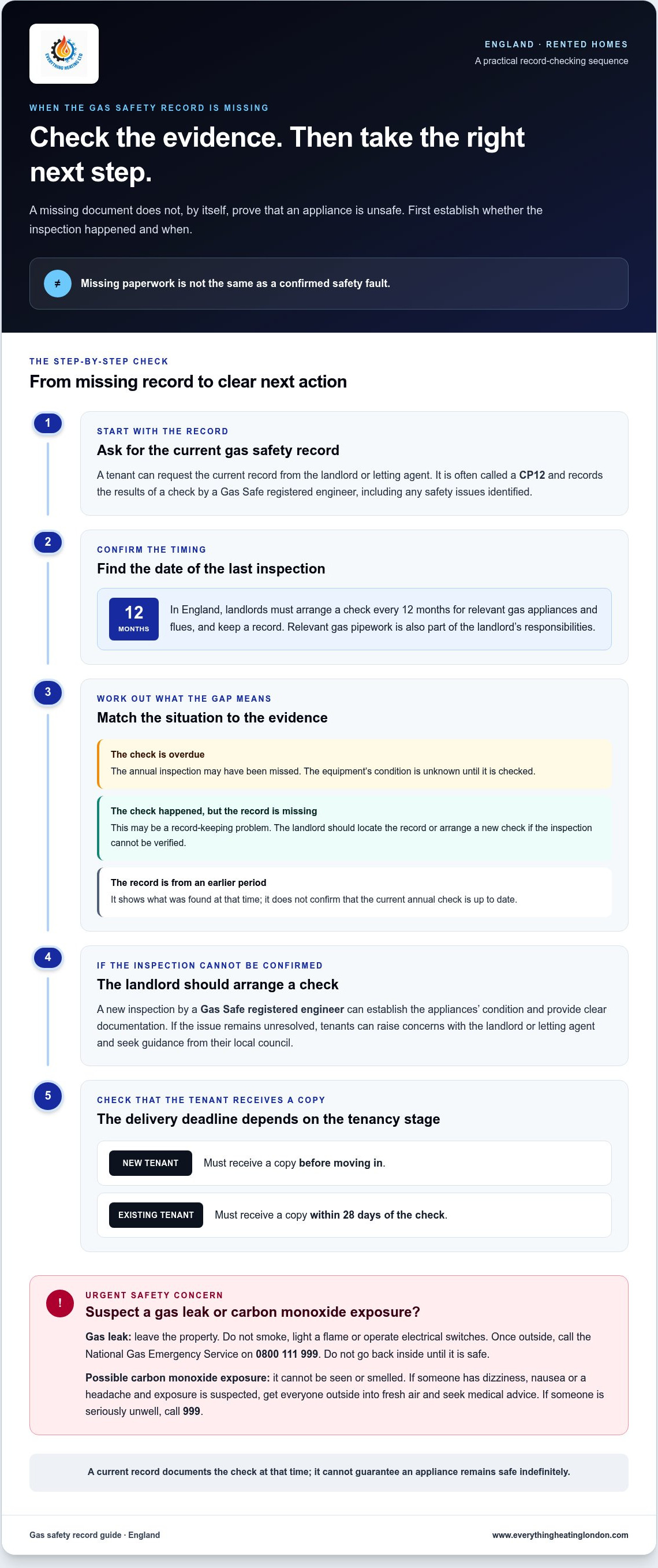
It means the landlord hasn’t provided a current gas safety record, or there’s no evidence that the required check was completed. That doesn’t automatically mean an appliance is unsafe. First establish whether the check is overdue, the paperwork is missing or the record relates to an earlier period.
In England, landlords must arrange a gas safety check every 12 months for relevant gas appliances and flues in their rental property, and keep a record of the check. A new tenant must receive a copy before moving in; existing tenants must receive one within 28 days of the check. The legal requirement for a landlord's gas safety certificate is set out under the Gas Safety (Installation and Use) Regulations 1998. Rules can differ across the UK, so this section focuses on England and London.
What is a CP12 or gas safety record?
“Gas safety certificate” is the familiar name for the landlord gas safety record, often called a CP12. It documents the results of a gas safety check carried out by a Gas Safe registered engineer, including what was checked and any safety issues identified. It isn’t a promise that an appliance will remain safe indefinitely, and it doesn’t replace action if a fault appears later.
Which gas equipment and rental situations are covered?
The landlord’s checks generally cover gas appliances and flues they provide for tenants to use, along with relevant gas pipework. This may include a boiler, gas fire or hob supplied with the property. A tenant-owned appliance is treated differently, but that doesn’t remove the landlord’s responsibilities for relevant pipework or flues. If ownership is unclear, establish which equipment is covered by the record.
The duties apply to landlords in private renting and social housing. The distinction between a missing record and an overdue check matters:
- The check is overdue: the landlord may have missed the required annual inspection. The equipment’s condition is unknown until it is checked.
- The check was completed but the record is missing: this may be a documentation problem. The landlord should locate the record or arrange a new check if the inspection can’t be verified.
- The record is from an earlier period: it shows what was found at the time, but doesn’t confirm that the current annual check is up to date.
So, renting a property without a gas certificate risks more than unclear paperwork if checks have lapsed. But the missing document alone doesn’t prove that a gas appliance is dangerous. Establish when the last inspection took place and whether a current record exists.
What are the real risks of renting without a current gas safety record?
The main concern is whether the gas appliances have been checked and are safe, not simply whether a document is missing. A missing record can point to a missed inspection, but it doesn’t prove an appliance is dangerous. Equally, a valid record reflects the condition at the time of the check. It can’t guarantee that an appliance remains safe afterwards.
Safety and health risks when checks are missed
A faulty or poorly maintained gas appliance may cause a gas leak, fire or carbon monoxide exposure. Carbon monoxide can’t be seen or smelled. If anyone develops symptoms such as dizziness, nausea or headache and you suspect exposure, get everyone outside into fresh air and seek medical advice. If someone is seriously unwell, call 999.
If you suspect a gas leak, leave the property. Don’t smoke, light a flame or operate electrical switches. Once outside, call the National Gas Emergency Service on 0800 111 999. Don’t go back inside until it’s safe to do so. The Health and Safety Executive explains Landlords' responsibility for gas safety, including duties to maintain gas appliances and arrange checks.
Legal, tenancy, and insurance consequences
For landlords, failing to meet gas safety duties can lead to enforcement or prosecution. The outcome depends on the circumstances, evidence and applicable law. A missing record alone doesn’t establish what happened: the inspection may have been completed but the document mislaid, or the check may have been missed. Either way, the landlord should establish what steps were taken and address any gaps.
Insurance isn’t automatically invalid just because a tenant can’t find a certificate. The effect depends on the policy wording and the facts of a claim. Landlords should review their policy and keep inspection records accessible. Tenants can request the current record and raise concerns with the landlord or letting agent. If the issue remains unresolved, they can seek guidance from their local council.
Possession advice also needs to be current. In England, section 21 no-fault evictions were abolished from 1 May 2026, so older claims that a missing certificate automatically invalidates a section 21 notice may no longer apply to new claims. Other possession routes depend on the legal ground and the circumstances. Get specific advice before acting.
A missing record can lead to safety concerns, regulatory action or practical disputes, but none of these outcomes follows automatically from the missing document alone. If a check is overdue or the record can’t be located, arranging a Gas Safety Certificate (CP12) can help establish the appliances’ condition and restore clear documentation. London landlords can find out more about gas safety checks and records.
What should tenants and landlords do when the gas certificate is missing?
Start by finding out whether the check took place and when. A missing copy may be a filing problem; an expired record or no evidence of an inspection needs prompt attention. In England, landlords must provide a new tenant with the gas safety record before they move in, give existing tenants a copy within 28 days of the check, and keep each record for at least two years. These steps help both parties establish the facts and agree what happens next.
- Establish the last check date. The landlord or agent should review emails, property files and engineer records. A tenant can ask for the date and a copy of the latest record.
- Make and answer a written request. Tenants should email or write to the landlord or agent, ask for the current record and keep a dated copy. Landlords should respond clearly, even if they’re still locating the paperwork.
- Arrange an inspection if needed. If the annual check is overdue, or there’s no reliable evidence it happened, the landlord should book a Gas Safe registered engineer. Tenants should cooperate with reasonable access arrangements so the check can go ahead.
- Resolve defects and complete the records. The landlord should address any safety issues identified, provide the record within the required timeframe and retain a copy. Keep the check date and next due date somewhere easy to find.
If you’re a tenant
Keep the conversation factual. Ask the landlord or agent to confirm whether the inspection was completed and to send the latest record. If you’ve raised the issue and it remains unresolved, consult current official housing advice or contact your local council for guidance. GOV.UK sets out a landlord’s safety responsibilities for private renting in England.
If you’re a landlord
Don’t treat an absent file as proof that a check took place. Verify it against the records available. If you can’t establish that the required inspection was completed, arrange one rather than relying on an old record. Keep the engineer’s report and proof of when it was given to tenants. For planning and budgeting, see this landlord gas safety certificate cost guide.
Clear records matter because renting a property without a gas certificate risks uncertainty about the appliances and difficulty demonstrating that duties were met. A professional CP12 check gives landlords a current record to share and tenants clearer information about the property’s gas safety.
How should you respond to immediate gas danger or a failed safety check?
Put people’s safety first. Don’t wait for paperwork or try to diagnose a fault yourself. If you suspect a gas leak or carbon monoxide exposure, leave the property and call for help from a safe place.
If you suspect a gas leak or carbon monoxide
If you smell gas, get everyone outside. Don’t light flames, smoke or operate electrical switches. Once you’re safely away, call the National Gas Emergency Service on 0800 111 999. Don’t re-enter until you’re told it’s safe.
Carbon monoxide has no smell. If someone feels unwell and you suspect exposure, move everyone outside into fresh air and seek medical advice. If anyone is seriously ill, call 999. Don’t go back inside to investigate or try to repair an appliance.
If an engineer identifies a fault
A gas safety check may find a defect that needs attention. The engineer will explain what they’ve found and what must happen next. Follow their safety instructions. If they say an appliance must be switched off or taken out of use, don’t use it until the required work has been completed and it’s safe to do so.
For landlords, the next steps are practical:
- Record the findings. Keep the gas safety record and note which appliance or part of the system needs attention.
- Arrange remedial work. Have the identified fault addressed by a suitably qualified gas engineer. A routine certificate alone doesn’t resolve a defect.
- Keep the evidence together. File the inspection record, repair details and any follow-up documentation so there’s a clear account of the actions taken.
Tenants should follow any instruction not to use an affected appliance and report new concerns to the landlord or agent promptly. If immediate danger remains, leave and call the emergency service rather than waiting for a reply.
The phrase “renting a property without a gas certificate risks” can sound like a paperwork issue, but a failed check calls for a clear safety response. A current record documents the inspection; it doesn’t replace repairs or make an unsafe appliance safe. Once urgent issues are dealt with, a fresh CP12 check can help landlords document the property’s gas safety. Arrange a Gas Safety Certificate (CP12) for your London rental property.
How can landlords restore compliance with a proper gas safety check?
Start by arranging a gas safety check with a Gas Safe registered engineer. Once the inspection is complete, follow up on any defects, give tenants the required record and organise the paperwork so the next check doesn’t become overdue. A current inspection and clear record replace uncertainty with a documented account of the property’s gas safety at the time of the check.
Prepare for the inspection
Before booking, gather the property address, details of the gas appliances and any previous gas safety records. Make sure the engineer can access the relevant appliances, pipework and connected flues. If there’s a known fault or an earlier report identified work that still needs attention, have those details ready. This helps the inspection cover the property’s actual equipment and relevant history.
Complete the check and address any findings
The engineer will inspect the relevant gas equipment and record the findings. If the check identifies a defect, follow the engineer’s instructions and arrange the necessary remedial work. Don’t treat the paperwork as a substitute for putting a safety issue right. Keep evidence of any repairs with the inspection record, along with follow-up documentation where applicable.
Everything Heating Ltd provides Gas Safety Certificates (CP12) in London. For landlords dealing with renting a property without a gas certificate risks, arranging a professional check is a practical step towards documenting the current condition of the gas equipment and meeting gas safety duties.
Keep records organised and set reminders
Store the latest record with its inspection date and any related repair evidence. Keep a digital copy as well as a clear property file, and note the next check date in a calendar or reminder system. In England, landlords must arrange checks every 12 months, provide existing tenants with a copy within 28 days of the check, and give new tenants the record before they move in.
Routine boiler servicing can help with ongoing boiler maintenance, but it doesn’t replace the landlord’s gas safety check or record. For information about servicing costs, see the boiler servicing cost guide.
To arrange a London gas safety certificate, find out about our gas safety checks. Keep the completed record accessible, share it within the required timeframe and set a reminder for the next check.
Put the next gas safety check in motion
A missing gas safety record needs a clear response, not assumptions. It doesn’t prove an appliance is unsafe, but landlords should establish whether the check is current and arrange an inspection if it’s overdue or can’t be verified. Tenants can request the latest record and raise unresolved safety concerns.
The key renting a property without a gas certificate risks depend on the facts: whether required checks were completed, whether any defects remain and whether the landlord can document the steps taken. If an engineer identifies a fault, follow their instructions and keep the appliance out of use when required until it’s safe.
Everything Heating Ltd is a Gas Safe registered business providing landlord Gas Safety Certificates (CP12) in London. A professional check documents the inspection and gives landlords a clear record to retain and share.
Arrange a gas safety check with Everything Heating Ltd and take a practical step towards clearer records and a safer rental property.
Frequently Asked Questions
Can a landlord rent out a property without a gas safety certificate?
A landlord must arrange the required gas safety check, but a missing copy doesn’t by itself prove that no check took place. In England, the landlord must provide the latest record to a new tenant before they move in and to existing tenants within 28 days of the check. If there’s no current check or the landlord can’t confirm one was completed, they should arrange an inspection and provide the record.
What happens if a tenant asks for a gas safety record and the landlord cannot provide it?
The landlord should check their property files and contact the engineer or agent who arranged the inspection to establish whether it was completed. If they can’t confirm a current check, they should book one with a Gas Safe registered engineer. Tenants can make a dated written request and keep a copy. If the issue remains unresolved, seek current housing advice or contact the relevant local council.
Does a missing gas safety certificate mean the property is unsafe?
No. A missing certificate doesn’t prove that an appliance is unsafe. The check may have taken place and the record may have been lost or misfiled. But without a current inspection record, there’s no clear evidence that the required check was completed. Ask when the last check happened. If it’s overdue or can’t be verified, the landlord should arrange an inspection rather than rely on an older record.
Can a tenant refuse access for a gas safety check?
Tenants should cooperate with reasonable arrangements for the landlord’s gas safety check. If the proposed time doesn’t work, explain promptly and suggest another suitable time. Don’t ignore requests for access, as this may delay an important inspection. A landlord should arrange access properly and shouldn’t assume that a request gives them permission to enter without agreement, except where a genuine emergency or other legal right applies.
How often must a rented property have a gas safety check?
In England, the landlord must arrange a check every 12 months for relevant gas appliances and flues they provide. A Gas Safe registered engineer must carry it out. The landlord must give the record to a new tenant before they move in and to an existing tenant within 28 days of the check. Keep track of the inspection date, as an older record doesn’t confirm the next check is current.
What should I do if I smell gas or suspect carbon monoxide in a rented property?
Leave the property and call the National Gas Emergency Service on 0800 111 999 from a safe place if you suspect a gas leak. Don’t smoke, use flames or operate electrical switches. If you suspect carbon monoxide exposure, get everyone into fresh air and seek medical advice. Call 999 if anyone is seriously unwell. Don’t go back inside to investigate or use an affected appliance.
Can a landlord be prosecuted for not having a gas safety record?
Yes, a landlord may face enforcement or prosecution for failing to meet gas safety duties, but it isn’t an automatic result of a missing document. The circumstances, evidence and applicable law matter. The record may have been misplaced even if the check took place, or the inspection itself may have been missed. Landlords should establish what happened, arrange any overdue check and keep records of inspections and remedial work.


