

Could your central heating be burning through your budget while your radiators stay stone cold? It's incredibly frustrating to watch your energy bills climb whilst your living room remains chilly and your boiler makes worrying, clunking noises. You're likely asking yourself, is a power flush worth it, or is the conflicting advice about system leaks and high costs a reason to wait? You want a warm home and a quiet, reliable system, but you need clear facts before you commit to a professional service.
This 2026 guide helps you decide if a deep system clean is the right investment for your London property by weighing up long-term energy savings against the upfront costs. We'll explore how clearing out internal sludge restores thermal efficiency, protects your manufacturer's warranty, and finally delivers the hot radiators you expect. You'll discover how to secure a silent, dependable heating system without the stress of hidden complications or confusing industry jargon. By the end, you'll have a clear path to lower monthly bills and a home that stays warm all winter long.
Key Takeaways
- Understand how magnetite sludge builds up amongst your pipes, causing cold spots and reducing your heating system's efficiency over time.
- Weigh up the long-term energy savings against the initial service price to finally answer the question: is a power flush worth it for your London home?
- Spot the seven critical warning signs that your radiators need a deep clean, such as unusual boiler noises or rooms that never quite get warm enough.
- Learn why a professional power flush is a restorative procedure rather than just a simple clean, and how it differs from a basic chemical flush.
- Discover how post-flush protection, like adding inhibitors and magnetic filters, helps to safeguard your boiler's warranty and prevent future debris build-up.
Is a Power Flush Really Worth the Investment for Your Home?
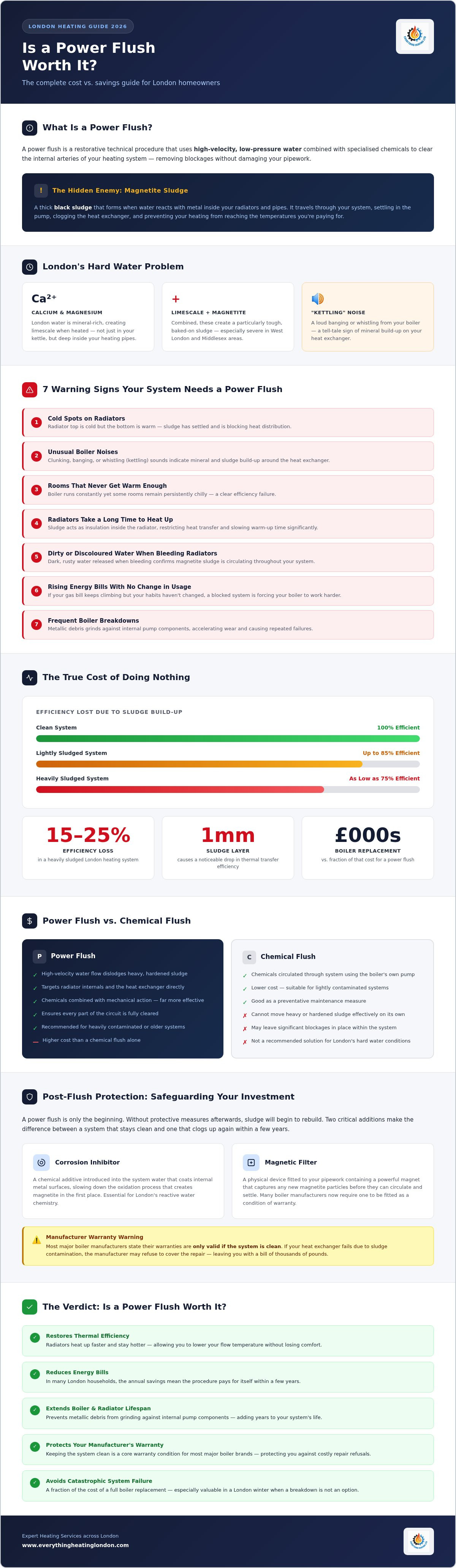
A power flush is a restorative technical procedure designed to clear the internal arteries of your home. It uses a high-velocity, low-pressure flow of water and specialised chemicals to strip away debris without damaging your pipework. Many homeowners ask, is a power flush worth it, especially when their heating seems to be working, albeit poorly. The answer lies in the hidden buildup of magnetite, a thick black sludge that forms when water reacts with the metal surfaces inside your radiators and pipes. When you consider the risk of a broken boiler in mid-winter, asking is a power flush worth it becomes a question of long-term reliability.
Ignoring this sludge is a gamble. Whilst the upfront cost of maintenance might feel like an extra expense, it's a fraction of the price of a total system failure. Magnetite doesn't just sit there; it travels. It settles in the pump, clogs the heat exchanger, and prevents your central heating system from reaching the temperatures you're paying for. In London, this process is accelerated by our unique environmental factors, making preventative care a necessity rather than a luxury.
How Power Flushing Works to Restore Your System
The process involves connecting a specialised pumping station to your system. This machine circulates water at a much higher speed than your standard boiler pump. Chemicals are added to the mix to break down stubborn blockages that have hardened over the years. This high-flow approach is essential because chemicals alone often fail to move heavy sludge. By targeting the radiator internals and the heat exchanger, the flush ensures that every part of the circuit is clear and ready to transfer heat efficiently once again.
London Hard Water: A Silent Killer of Heating Efficiency
London is famous for its hard water, which is rich in minerals like calcium and magnesium. When this water is heated, it creates limescale. This scale doesn't just stay in your kettle; it forms amongst your heating pipes and mixes with magnetite to create a particularly tough, baked-on sludge. In West London and Middlesex, this combination often leads to "kettling," a loud banging or whistling noise coming from the boiler. Because our local water is so mineral-heavy, London systems often require more frequent health checks to prevent these deposits from causing permanent damage to the boiler's internal components.
Analysing Power Flush Heating System Costs vs. Long-Term Savings
When calculating if the upfront investment makes sense, you have to look beyond the initial invoice. The power flush heating system cost is influenced by the size of your property and the current state of your pipework. To determine is a power flush worth it for your specific home, you must look at the potential for long-term savings. A system with fifteen radiators naturally takes longer to clear than a small flat. However, the real question is whether the "do nothing" approach is actually more expensive in the long run.
Sludge acts as an internal insulator. It prevents heat from reaching the surface of your radiators, which forces your boiler to run for longer periods to reach the temperature set on your thermostat. Industry data suggests that a heavily sludged system can lose between 15% and 25% of its efficiency. For a typical London semi-detached home, this translates to significant wasted spend on gas every single month. If you are still weighing up is a power flush worth it, remember that most major boiler manufacturers now state that their warranties are only valid if the system is clean. If your heat exchanger fails because of sludge, they may refuse to cover the repair.
Energy Bill Reductions: The Financial Reality
A professional flush removes the heavy magnetite that restricts flow. Once cleared, your radiators heat up faster and stay hot for longer. This efficiency gain often allows you to lower your boiler's flow temperature without losing comfort. Some industry professionals report that even a 1mm layer of sludge can cause a noticeable drop in thermal transfer. In many London households, the savings on annual energy bills mean the procedure pays for itself within a few years. It's a rare example of a maintenance task that actually puts money back into your pocket over time.
Extending the Lifespan of Your Boiler and Radiators
Replacing a boiler costs thousands of pounds. A power flush costs a fraction of that and can add years to your system's life. It prevents the internal parts from grinding against metallic debris. This reduces the risk of "lockout" codes that leave you without hot water on a cold morning. Keeping the water clean changes the chemical behaviour of the fluid, making it less corrosive to your radiators. If you're concerned about your system's health, you can book a professional assessment to see if a flush is necessary. Preventing a breakdown is always cheaper and less stressful than reacting to one.
Recognising the Signs Your Radiators Need a Professional Deep Clean
Heating systems rarely fail without warning. Usually, they drop hints for months or years before a total breakdown occurs. If you've been wondering is a power flush worth it, looking at your radiators' behaviour often provides the answer. Many homeowners start by bleeding their radiators. This is a great way to remove trapped air, but it won't touch the heavy sludge sitting at the bottom of the panels. If you find yourself bleeding the system every few weeks, you aren't fixing the problem; you're just managing a symptom. Air in the system is often a side effect of the corrosion process happening deep inside your pipes.
There are 7 key signs that indicate your system is struggling with internal debris. One of the easiest tests involves checking the colour of the water when you bleed a radiator. Clean or slightly cloudy water is a good sign. However, if the water is dark, inky, or contains "coffee-ground" particles, magnetite has taken over. This debris restricts flow and forces your boiler to work harder than necessary, which eventually leads to the issues that make people ask is a power flush worth it in the first place.
Cold Spots and Strange Noises: The Early Warning Signs
The "cold bottom" test is a reliable way to check for sludge. Since magnetite is heavy, it settles at the lowest point of your radiators. If the top of the radiator is hot but the bottom feels like ice, the unit is likely full of metallic debris. This isn't just a minor annoyance. It's a sign that your system's circulation is compromised. You might also notice "kettling" noises. This sounds like a boiling tea kettle or a loud banging within the boiler itself. It happens when sludge restricts water flow through the heat exchanger, causing the water to overheat and turn into steam. Frequent pump failures or a noisy, vibrating system are other red flags you shouldn't ignore.
Boiler Lockouts and Efficiency Drops
Modern boilers are smart. They have sensors that monitor flow rates and temperatures. When sludge blocks the internal pipework, the boiler can't move heat away fast enough. This often triggers a "lockout" or a specific fault code, shutting the system down for safety. If your boiler keeps resetting itself, sludge is a likely culprit. You might also notice your house takes hours to reach a comfortable temperature. This slow warm-up is a classic sign of poor circulation amongst your pipework. When you see your gas consumption rising despite the house feeling colder, the need for a professional clean becomes much clearer.
Power Flush vs. Chemical Flush: Choosing the Right Level of Service
Choosing the right service depends on the current health of your system. A chemical flush is a gentle, gravity-fed process. It involves adding a cleaning agent to the system and letting it circulate at normal pressure. This is usually enough for newer systems or as a preventative measure during a routine boiler service. However, when your radiators are cold and your bills are high, asking is a power flush worth it often comes down to choosing between a quick fix and a proper solution. A mechanical power flush uses a high-velocity pump to physically dislodge years of baked-on magnetite that a simple chemical drain would leave behind. It's the difference between a quick rinse and a deep steam clean.
The Difference in Depth: Why Price Isn’t the Only Factor
A chemical flush typically takes around two hours. It's a "circulate and drain" method. In contrast, a professional power flush is a full-day operation. It targets every radiator individually to ensure total clearance. If your system is heavily blocked, a cheap chemical flush is often a waste of money because it can't move the dense sludge sitting at the bottom of your radiators. You're effectively paying for a service that doesn't solve the core problem. A power flush is a restorative procedure, not just a maintenance task.
Managing the Risks for Older London Properties
A common concern amongst London homeowners is whether the high-velocity flow will cause leaks. It's a valid worry. In reality, a power flush operates at low pressure. It rarely causes a new hole. Instead, it might reveal pre-existing "pinhole" leaks that were temporarily plugged by sludge. This is why a professional assessment is vital. At Everything Heating Ltd, our engineers check the integrity of your pipework before we even connect the machine. We look for signs of advanced corrosion or thin-walled radiators that might not handle the agitation. If your system is too fragile, we'll tell you. We'd rather recommend a gentler chemical approach than risk damaging your home. If you're still debating is a power flush worth it, remember that protecting your property is our priority. You can book a system health check with our Gas Safe registered team today to find the safest option for your home.
Ensuring a Successful System Clean in Your London Home
A power flush is a significant maintenance step. To ensure the investment delivers the results you expect, you must hire a Gas Safe registered engineer. This qualification is your guarantee that the person working on your system understands the complex interaction between water chemistry and boiler mechanics. When homeowners wonder is a power flush worth it, the success of the outcome depends entirely on this professional execution. A qualified specialist knows how to manage the flow rates to protect your boiler's delicate internal seals while still removing the stubborn sludge.
During our Middlesex power flushing service, we follow a strict technical protocol. We don't just rely on the machine; we use thermal imaging to verify the results. This allows you to see the heat returning to previously cold radiators in real-time. We also conduct flow tests and temperature checks to confirm that the circulation is fully restored throughout the whole property. By the time we finish, you'll have clear evidence that your heating is operating at maximum efficiency.
The Role of Magnetic Filters and Inhibitors
Cleaning the system is just the first phase. Keeping it clean is what makes the procedure a long-term success. We always add high-quality chemical inhibitors to the fresh water. These chemicals are vital in London’s hard water environment, as they prevent minerals and oxygen from reacting with your metal pipework. We also recommend fitting a magnetic filter if you don't already have one. This component acts as a permanent guard, trapping any new debris before it can reach your boiler. It's the best way to ensure that is a power flush worth it remains a positive answer for years to come.
Booking Your Professional Power Flush with Everything Heating Ltd
We provide a straightforward, no-nonsense service across West London. Our engineers are experts in local heating challenges and focus on system optimisation rather than just a quick fix. We don't hide behind jargon or confusing prices. Instead, we offer clear guidance and leave your home as clean as we found it. We're here to restore your comfort and lower your bills through practical, reliable engineering. Get a transparent quote from Everything Heating Ltd today and see the difference a professional clean makes to your home's warmth.
Secure Your Home's Warmth and Efficiency
Maintaining your central heating isn't just about fixing immediate leaks; it's about protecting the long-term health of your property. We've explored how magnetite sludge chokes your radiators and forces your boiler to burn more gas than necessary. By removing these stubborn blockages, you don't just get a warmer house; you protect your boiler's manufacturer warranty and significantly extend the lifespan of your entire system. Asking is a power flush worth it becomes much simpler when you see the immediate drop in your monthly energy costs and the return of silent, efficient operation throughout your home.
Our team of Gas Safe registered engineers provides transparent, straight-talking advice tailored specifically to the challenges of London's hard water. We focus on optimising your system so you can stop worrying about cold spots or anxious boiler noises. Restore your heating efficiency with a professional power flush from Everything Heating Ltd and gain the peace of mind that comes with a truly reliable heating system. You deserve a home that stays warm and comfortable all winter long.
Frequently Asked Questions
Is a power flush a waste of money?
No, a professional power flush is an investment that typically pays for itself through lower energy bills and avoided repair costs. By removing magnetite sludge, your system operates more efficiently. This reduces gas consumption. It also protects your boiler's warranty, which manufacturers often void if sludge causes a breakdown. When you consider the price of a new boiler installation, the question of is a power flush worth it becomes clear; it's a vital preventative measure.
How long does a power flush take to complete?
A standard power flush usually takes between four and eight hours to complete properly. The exact duration depends on the number of radiators in your property and how much sludge has accumulated amongst your pipework. For a small flat with five radiators, we might finish in half a day. However, a large four-bedroom house with fifteen radiators often requires a full day of professional work to ensure every circuit is perfectly clear.
Will a power flush fix my noisy boiler?
Yes, it often resolves issues like "kettling," which is the loud banging or whistling noise caused by restricted water flow. When sludge blocks the heat exchanger, water overheats and turns to steam. This creates those alarming sounds. By clearing these internal blockages and restoring smooth circulation, a power flush can return your boiler to quiet, reliable operation. It's a practical way to alleviate the anxiety caused by a noisy, struggling heating system.
Can I do a power flush myself to save money?
We don't recommend attempting a power flush yourself. The process requires a specialised high-velocity pumping station and professional-grade chemicals that aren't available to the general public. More importantly, an inexperienced operator can cause significant damage to the boiler's internal seals or fail to manage the wastewater correctly. To ensure the job is done safely and effectively, you should always hire a Gas Safe registered engineer who understands complex heating mechanics.
Does a power flush cause leaks in old central heating systems?
A power flush operates at a high velocity but low pressure, so it rarely creates new holes in your pipework. However, it can occasionally reveal pre-existing "pinhole" leaks that were previously plugged by thick sludge. Before starting any work, our engineers conduct a thorough system integrity check to assess the condition of your radiators. If we find that your system is too corroded or fragile, we'll recommend a gentler cleaning alternative instead.
How often should I have my heating system power flushed?
Most heating systems benefit from a professional power flush every five to six years. However, this interval can vary depending on the age of your system and the quality of the water in your local area. London's mineral-rich hard water can accelerate the build-up of scale and sludge. If you notice cold spots on your radiators or rising energy bills, it's often a sign that you need a system clean sooner.
What is the difference between a power flush and a standard flush?
A standard chemical flush is a gravity-fed process that relies on the system's own pump to circulate cleaning agents. It's useful for routine maintenance but won't shift heavy blockages. A power flush uses a dedicated external machine to create high-velocity flow and mechanical agitation. This more intensive method is necessary for heavily sludged systems where you need to physically dislodge baked-on magnetite. Determining is a power flush worth it usually depends on which method your system's health requires.
Will a power flush make my house warmer?
Yes, you'll notice a significant difference in how quickly and evenly your home heats up. By removing the sludge that acts as an internal insulator, your radiators can finally reach their intended temperature. This means no more cold spots at the bottom of the panels or rooms that stay chilly whilst the boiler runs constantly. A clean system transfers heat far more effectively, ensuring every corner of your house stays warm and comfortable.


