

Your central heating system is likely being throttled by a silent, black sludge that steals up to 10% of its efficiency. You pay for gas that never actually warms your rooms, leaving you with stubborn cold spots and a noisy, kettling boiler. You might be wondering, how does a power flush work to fix this? It isn't just a simple rinse or a quick chemical splash. It's a high-velocity restoration process designed to purge your pipes of magnetite and restore your home's warmth.
It's frustrating to watch energy bills rise while your radiators stay lukewarm. You deserve a system that runs quietly and keeps your costs down without any hidden complications or guesswork. We've written this guide to provide total transparency on the process. We'll walk you through the specialised pumping equipment, the chemicals involved, and exactly how this service protects your boiler warranty. You'll gain the confidence to know your heating is being handled by experts who value your time and your budget. By the end, you'll understand why this is the only way to truly tackle London's sludge problems.
Key Takeaways
- Understand why black magnetite sludge forms in your pipes and how it creates those frustrating cold spots on your radiators.
- Discover exactly how does a power flush work to restore your heating efficiency using high-velocity pumping and specialised chemicals.
- Learn the difference between a standard chemical flush and a professional power flush to ensure you aren't overcharged for the wrong service.
- Identify the key warning signs of system contamination, from noisy boiler "kettling" to radiators that are slow to warm up.
- See how a system deep clean can lower your monthly energy bills and prevent the need for a costly new boiler installation.
What Is a Power Flush and Why Does Sludge Build Up?
A power flush is a specialised cleaning process for your central heating system. It isn't a simple rinse. Instead, it uses a high-velocity pump to force water and cleaning chemicals through your radiators at low pressure. This ensures that while the sludge is moved, your pipework isn't put under undue stress. If you're asking how does a power flush work, think of it as a deep detox for your home's veins. It targets the debris that standard maintenance simply can't reach.
The impact of this buildup is felt most in your wallet. When sludge restricts the flow of water, your boiler has to run for longer to reach the temperature set on your thermostat. This isn't just a minor annoyance; it can lead to a 5-10% drop in efficiency. Over time, this extra strain shortens the lifespan of your boiler, often leading to a premature need for a new installation. By clearing the system, you restore the thermal path and ensure every penny you spend on gas actually heats your home.
The Science of Sludge: Understanding Magnetite
Inside your radiators, a constant chemical reaction is taking place. When water meets the steel of the radiator panels, it triggers oxidation. Tiny particles of rust break away and mix with the water. These particles eventually form a thick, black, metallic paste. Magnetite is the primary byproduct of internal heating system corrosion. Because it's far heavier than water, it naturally sinks. It settles at the bottom of radiators, creating those frustrating cold spots, and can even clog the delicate heat exchanger in your boiler. This forces the entire system to work harder, burning more fuel for less warmth.
Why London Systems Suffer More
Londoners face a unique set of challenges. Our water is notoriously hard, packed with minerals like calcium and magnesium. When these minerals are heated, they form limescale. This scale doesn't just sit there; it binds with the magnetite sludge to create a rock-hard internal coating. This is especially problematic in older London properties where Victorian-era pipework is often narrower and more prone to blockages. Knowing when to power flush a heating system is vital for these homes. Identifying the signs early can prevent a total system failure. By clearing this debris, you aren't just improving heat. You're protecting your boiler from the internal damage that leads to expensive, emergency repairs.
Step-by-Step: How a Professional Power Flush Works
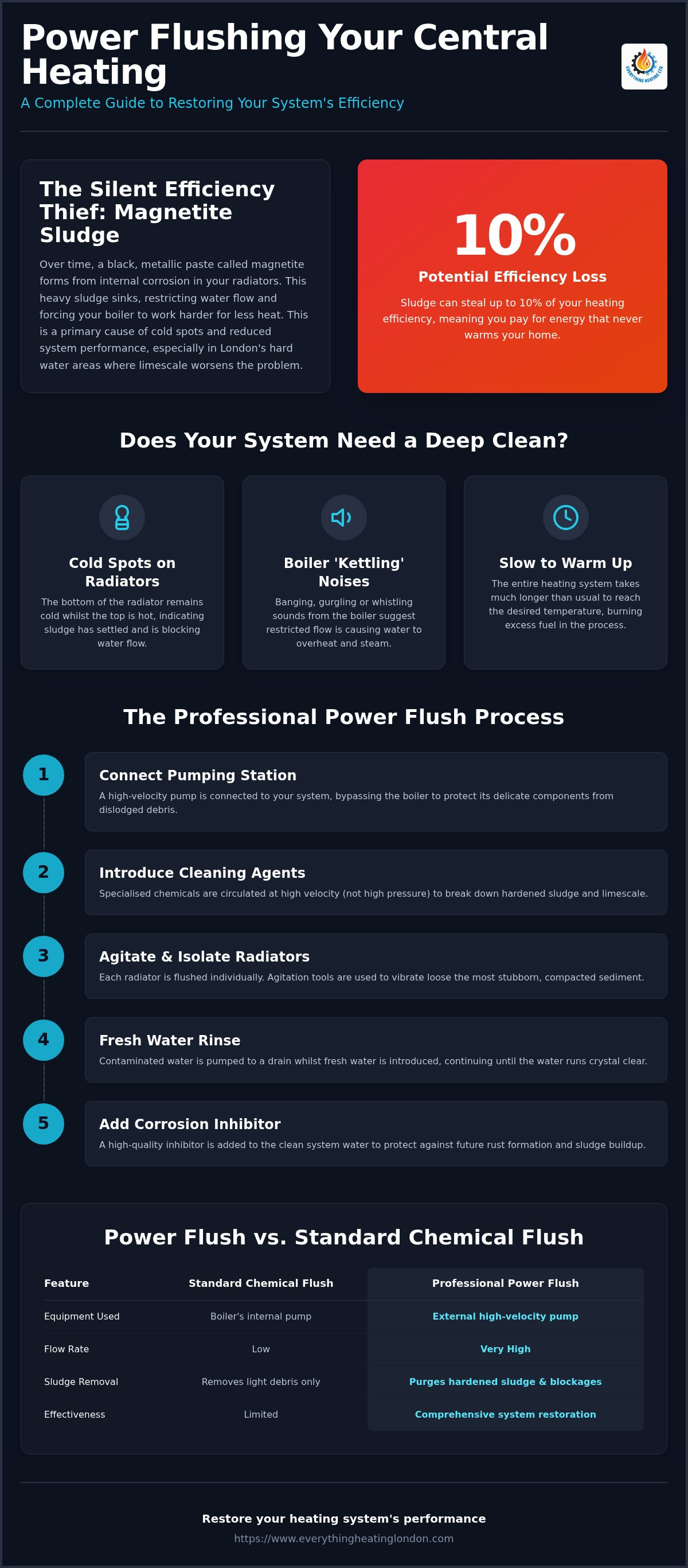
A professional power flush is a methodical, controlled process that takes several hours to complete properly. We begin by connecting a specialised pumping station to your system, typically at the circulation pump or a radiator tail. This setup creates a closed loop. It ensures that the black sludge we dislodge stays contained within the machine or travels directly to a drain rather than spilling onto your carpets. If you've wondered how a powerflush works in a real-world setting, it's all about creating a high-velocity flow that your boiler's internal pump simply cannot match.
The Pumping Station and Chemical Phase
Once the machine is connected, we bypass your boiler's internal pump. This is a vital safety step. It protects the delicate, expensive components of your boiler from being hit by the abrasive magnetite debris we are about to stir up. We then introduce professional-grade cleaning chemicals into the water. Depending on the age and condition of your pipework, we use either acid-based or alkaline cleaners to break down the hardened sludge.
It's important to clarify that the process relies on high velocity, not high pressure. This distinction is crucial for London homes with older joints or Victorian pipework. High pressure could cause leaks; high velocity simply moves the water fast enough to carry heavy sediment away. To shift the most stubborn blockages, we use agitation tools. These are specialised radiator vibrators that we apply to the outside of the panels. They shake loose compacted sediment that chemicals alone might miss. We focus on one radiator at a time by closing the valves on all others. This concentrates the full cleaning power on a single "trouble" area until it's clear.
Fresh Water Rinse and Inhibitor Protection
After we've dislodged the debris, we begin the fresh water rinse. We pump the contaminated, sludge-filled water out to an external drain whilst simultaneously introducing fresh water into the system. This continues until the water running through our testing equipment is crystal clear. We don't guess; we verify the results.
The final step is the most important for your system's future. We add a high-quality corrosion inhibitor. This chemical stays in your system, coating the internal metal surfaces to prevent rust and magnetite from reforming. We finish by testing the water pH to ensure the system is chemically neutral and fully protected. If your radiators are showing signs of blockages, our Gas Safe engineers can provide a professional power flush to get your heating back to peak performance.
Power Flush vs Chemical Flush: Which Removal Method Is Best?
Choosing the right cleaning method depends entirely on the symptoms your heating system is showing. It isn't a one-size-fits-all situation. While some engineers might suggest a quick rinse, others will insist on a full restoration. Understanding how does a power flush work compared to a basic chemical rinse is essential for making the right choice for your home. There are three main levels of cleaning, and picking the wrong one could mean you're paying for a service that doesn't actually solve your problem.
A standard chemical flush is often gravity-fed or relies on your boiler's internal pump. It's a useful tool for new boiler installations where the pipework is already relatively clean. However, it lacks the velocity to move heavy magnetite (black iron oxide sludge) that has compacted over several years. Magnetic filtration is another common term you'll hear. These filters are excellent preventative tools that catch debris during daily operation, but they are not a curative solution for a system that is already struggling with cold spots or noise.
The Comparison Framework: When to Choose Which
To help you decide, we've broken down the three primary methods used by professionals today. Whilst a chemical flush is cheaper, it rarely removes the heavy magnetite found in the bottom of radiators.
| Method | Effectiveness | Typical Time | Best Suitability |
|---|---|---|---|
| Magnetic Filter | Preventative | 1 Hour | New or recently cleaned systems |
| Chemical Flush | Low to Medium | 2-3 Hours | New installs with light debris |
| Power Flush | High (Restorative) | 6-10 Hours | Systems with cold spots or noise |
A power flush is the gold standard because it's the only method that uses external force to physically shift settled debris. If your radiators are already cold at the bottom, a chemical rinse will simply flow over the top of the sludge without moving it.
Is Your System Suitable? When to Avoid a Power Flush
We believe in straight-talking advice, and that means telling you when a power flush isn't the right move. In extremely old properties with heavily corroded iron pipes, the sludge can sometimes act as a "plug" for tiny pinhole leaks. Removing that sludge could reveal existing damage that was previously hidden. At Everything Heating London, we perform a thorough professional assessment before we ever connect our machines. We check the age of your system and the integrity of your joints to ensure the process is safe. You can read more about the specific conditions in our guide on is a power flush worth it for your home.
Identifying the Signs: Does Your London Home Need a Deep Clean?
Your heating system often gives you plenty of warning before it fails completely. These signs are easy to miss if you aren't looking for them, but they almost always point to the same culprit: internal contamination. When sludge builds up, it creates physical barriers that prevent heat from reaching your rooms. Understanding how does a power flush work helps you recognise when these symptoms require a professional restoration rather than a simple DIY tweak.
Beyond the radiators, you might notice your boiler behaving strangely. If it takes longer to fire up or seems to be running constantly without reaching the desired temperature, the system is struggling. Frequent pump failures or "stuck" motorised valves are also common secondary symptoms. These components are designed to move water, not thick metallic paste; when the water becomes too heavy with debris, the mechanical parts simply burn out.
The Radiator "Touch Test"
The simplest way to diagnose your system is with a quick physical check. Turn your heating on and wait about 20 minutes for the system to reach its operating temperature. Carefully run your hand across the surface of each radiator. If the metal feels noticeably colder at the base than at the top, you have found a sludge trap. This heavy debris settles at the bottom, preventing hot water from circulating through the entire panel.
It is important to distinguish this from air-related issues. If the top of the radiator is cold whilst the bottom is hot, you likely just have trapped air. You can usually fix this yourself by following our guide on how to bleed radiators. However, if the water that escapes during bleeding is discoloured or jet black, it is a clear sign that the internal corrosion is advanced and a deep clean is necessary.
Boiler Noise and Efficiency Drops
Have you noticed your boiler making unusual whistling or banging sounds? This is known as "kettling" and it occurs when sludge restricts the flow of water through the heat exchanger. The water that does manage to get through becomes trapped and starts to boil, creating the same noise as a kitchen kettle. This is a major red flag for efficiency. Your boiler is overheating internally, which wastes gas and puts immense strain on the components.
Ignoring these noises will eventually lead to a complete breakdown. By the time your boiler stops working, the damage to the heat exchanger might be irreversible, necessitating a costly boiler repair West London. Addressing the sludge early is always the more economical choice. If you've spotted any of these warning signs, book a system health check today to prevent a winter emergency.
Restoring Your System with Everything Heating London
Restoring your heating system isn't just about clearing out sludge. It's about securing the long-term health of your home. A successful power flush results in a noticeably quieter boiler, faster heat-up times, and lower monthly gas bills. By removing the magnetite that we've discussed, you take the strain off your boiler's internal components. This often prevents the need for a premature replacement. Understanding how does a power flush work is the first step toward a more efficient home. Every service we perform is designed to give you peace of mind and total clarity on your system's health.
We understand that home maintenance can be stressful. That's why we maintain a straight-talking approach. If your system is too old or the pipes are too fragile to handle the process, we'll tell you. We only recommend a flush if it's the right technical solution for your specific problem. Our Gas Safe registered engineers are specialists in London's unique heating challenges. We know how the local hard water interacts with Victorian and modern pipework alike. We don't use high-pressure tactics or hide behind technical jargon. Instead, we show you the results of our water testing so you can see the improvement for yourself.
Professional Service in West London and Beyond
We provide expert power flushing Middlesex and across the surrounding West London areas. Our team respects your home. We use protective covers and ensure our pumping station remains contained to prevent any mess. Once the job is finished, we don't just pack up and leave. We provide a formal certificate of completion. This document is essential for your records and is often required by manufacturers to keep your boiler warranty valid. It proves that your system has been cleaned to professional standards and is now running at peak performance.
Next Steps: Get Your Heating Back on Track
Transparency is at the heart of what we do. We know that many homeowners worry about being overcharged for heating services. To help you plan your maintenance, we've created a detailed breakdown of power flushing cost London. This guide ensures you have all the facts before you commit. If you've noticed cold spots or noisy pipes, don't wait for a total breakdown. Now that you know how does a power flush work to protect your system, it's time to take action. Book your system assessment with Everything Heating Ltd today. Our engineers will provide an honest evaluation and help you get your heating back to peak efficiency.
Secure Your Home's Warmth for the Long Term
Understanding how does a power flush work is the first step toward reclaiming a comfortable, efficient home. It isn't just a simple maintenance task; it is a technical restoration that targets the heavy magnetite sludge standard cleaning methods leave behind. By clearing these blockages, you ensure every penny spent on energy actually goes toward heating your rooms. Our Gas Safe registered engineers are London hard water specialists who understand the specific stresses placed on your pipework. We don't believe in guesswork or hidden fees. We provide straight-talking advice to ensure you only invest in a power flush if your system truly needs it.
You deserve a heating system that runs quietly and reliably throughout the coldest months. Don't let stubborn sludge drive up your bills or lead to a costly breakdown. We are here to help you optimise your energy management and extend the lifespan of your boiler with professional, transparent service. Take the next step toward a more efficient home today. A quiet, warm, and cost-effective heating system is only a professional assessment away.
Book a Professional Power Flush Assessment with Everything Heating Ltd and get your heating back on track.
Frequently Asked Questions
How long does a power flush take for a standard London home?
A professional power flush typically takes between six and ten hours to complete for a standard domestic property. The exact duration depends on the number of radiators and the severity of the sludge buildup. If you're wondering how does a power flush work in terms of time, older London homes with complex Victorian pipework often take the full day. We focus on one radiator at a time until the water runs clear.
Will a power flush cause my pipes to leak?
A power flush is unlikely to cause leaks because it uses high velocity rather than high pressure. The machine circulates water at a speed that dislodges debris without putting undue stress on your pipework joints. However, if your system is extremely old and heavily corroded, the sludge might be "plugging" existing pinhole leaks. Our engineers perform a thorough assessment beforehand to ensure your system is suitable for the process.
Is it possible to DIY a power flush?
It isn't possible to perform a true power flush yourself because the process requires a specialised, high-velocity pumping station. DIY flushing kits usually rely on your mains water pressure or your boiler's internal pump, which lacks the force to move heavy magnetite. Professional chemicals also require careful handling and neutralising. Attempting this without the right equipment can damage your boiler or leave the most stubborn sludge behind in your radiators.
How often should a central heating system be power flushed?
Most central heating systems benefit from a power flush every five to six years. However, this isn't a strict rule. If you have a magnetic filter installed and use high-quality corrosion inhibitors, your system might stay clean for longer. You should consider a flush if you notice cold spots at the bottom of radiators, noisy operation, or rising energy bills. Regular servicing helps us monitor your water quality and system health.
What is the difference between a power flush and a chemical flush?
The main difference lies in the force used to move debris. A chemical flush uses your boiler's internal pump to circulate cleaners and is only suitable for light maintenance. If you're asking how does a power flush work differently, it uses a powerful external machine to create high-velocity flow. This is the only way to physically shift the heavy, compacted magnetite that settles at the bottom of older radiators.
Can a power flush fix a noisy boiler?
Yes, a power flush is often the solution for a kettling boiler. These whistling or banging sounds occur when sludge builds up in the heat exchanger, causing the water to overheat and boil in restricted areas. By purging this debris, we restore the correct flow and thermal transfer. This stops the noise and prevents the boiler from overheating, which significantly reduces the risk of a total component failure or an expensive repair.
Do I need a power flush before installing a new boiler?
Yes, most manufacturers require a clean system to validate your new boiler's warranty. Standards like BS 7593:2019 mandate that central heating systems are cleaned and protected before a new unit is commissioned. Installing a modern boiler onto old, sludge-filled pipes will quickly damage the new heat exchanger. A power flush ensures your new investment is protected from day one and runs at its maximum efficiency for years to come.
What happens to the sludge after it is removed from the system?
During the process, the dislodged sludge is either trapped in the magnetic filter of our pumping station or flushed directly to an external drain. We continue the high-velocity rinse until the water coming out of your system is completely clear. We then neutralise any remaining chemicals and add a corrosion inhibitor. This ensures that the black magnetite is fully removed from your home and cannot settle back into your radiators.


