

What if your boiler isn't actually failing, but is simply choking on years of internal corrosion? It's incredibly frustrating to watch your gas bills climb whilst your radiators stay stubbornly lukewarm. You might even fear that those strange clunking noises mean a costly breakdown is just around the corner. We understand that home maintenance can feel like a minefield of hidden costs and confusing jargon.
The truth is often simpler than a full system replacement. Knowing when to power flush a heating system is the first step toward reclaiming a warm, quiet home. This guide highlights the seven critical warning signs that your pipes are blocked by black iron oxide sludge. We will show you how a professional deep clean restores efficiency, protects your boiler, and ensures you aren't paying for heat that never reaches your rooms.
We will walk through the technical symptoms of magnetite buildup and explain how the process works under the BS 7593:2019 standards. You'll learn how to spot the difference between a minor glitch and a system that's truly struggling. Let's get your heating back to its best performance.
Key Takeaways
- Identify the physical symptoms of system sludge, including radiators with cold bases and boilers that make unusual "kettling" noises.
- Understand how magnetite buildup inside your pipework forces your boiler to work harder and drives up your monthly energy costs.
- Learn exactly when to power flush a heating system by spotting the seven specific warning signs that your radiators are blocked.
- Distinguish between a professional power flush and a standard chemical flush to ensure you get the most effective treatment for your home.
- Discover how a thorough deep clean restores full heat to every room and protects your boiler from premature failure.
Understanding Sludge and Magnetite: Why Systems Need Cleaning
Sludge isn't just dirty water that has managed to get into your pipes. It is a chemical byproduct of the metal inside your radiators breaking down over time. If you ignore it, your system's efficiency drops and your monthly bills rise. Understanding this process helps you decide when to power flush a heating system before a minor blockage becomes a total boiler failure.
The Chemistry of Central Heating Sludge
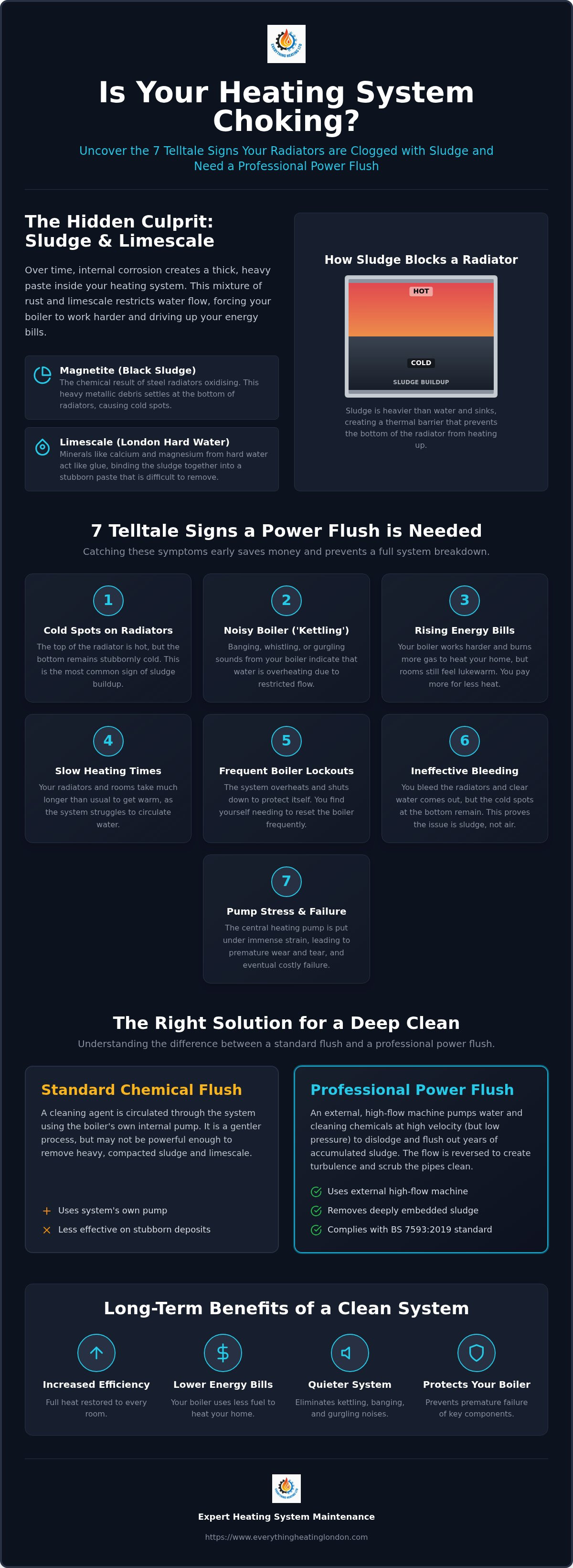
Most radiators are made from steel. When water and oxygen circulate through them, a chemical reaction occurs called oxidation. This creates black iron oxide, commonly known as magnetite. Magnetite is a metallic debris that restricts flow. Because it is much heavier than water, it doesn't just float around. It sinks. It settles in the lowest parts of your radiators and the horizontal runs of your pipework. This is why you often feel cold spots at the bottom of your radiators whilst the tops remain warm. It is a physical weight that your pump has to struggle against every single day.
London Hard Water and Heating Efficiency
Living in London presents a specific challenge for any central heating system. Our water is notoriously hard, meaning it is packed with minerals like calcium and magnesium. When this water is heated, it creates limescale. In a heating system, limescale doesn't just sit there. It acts as a binder, or a "glue," for the magnetite sludge. This combination creates a thick, stubborn paste that is much harder to remove than standard sludge found in soft-water areas.
This mixture is particularly dangerous for your boiler’s heat exchanger. The heat exchanger has very narrow channels designed to transfer heat quickly. When the "London mix" of limescale and magnetite enters these channels, it creates a physical barrier. Your boiler then has to burn more gas just to get the same amount of heat into your rooms. It's an expensive and unnecessary waste of energy.
Modern high-efficiency boilers are fantastic for saving energy, but they are far more sensitive than the old cast-iron models of the past. Their internal components are precision-engineered with tight tolerances. Even a small amount of sludge can cause a modern boiler to overheat or "kettle," leading to expensive repairs. Recognising these signs early is the best way to protect your investment and keep your home warm without overpaying the energy companies.
7 Tell-Tale Signs It is Time to Power Flush Your Heating System
Identifying when to power flush a heating system doesn't require a degree in engineering. You just need to pay attention to how your radiators and boiler behave during daily use. Most homeowners wait until the heating fails completely before seeking help, but the warning signs usually appear months or even years in advance. Catching these symptoms early saves money and prevents the stress of an emergency breakdown.
The "Cold Bottom" Test: Sludge vs. Air
Many people assume that a cold radiator just needs "bleeding." This is a common mistake. To diagnose the problem, run your hand carefully across the radiator surface after the heating has been on for thirty minutes. If the top is cold but the bottom is hot, you have trapped air. Bleeding the radiator with a key will fix this in seconds.
However, if the top is hot but the bottom is cold, you are dealing with sludge. As we established, magnetite is heavy. It settles at the base of the unit, creating a thick, metallic barrier that prevents hot water from circulating through the bottom half of the radiator. Bleeding will not help here. In fact, if you bleed a radiator and only clear water comes out whilst the bottom remains cold, it is a definitive sign of a blockage. If you are noticing these symptoms, a professional assessment of your heating system can confirm if a flush is the best solution.
Boiler Kettling and Pump Stress
Your boiler should operate with a steady, low hum. If it starts making banging, whistling, or "kettling" sounds, it is struggling. Kettling occurs when sludge or limescale restricts the water flow through the heat exchanger. The water trapped inside gets too hot too quickly, turning into steam and causing that distinctive whistling noise. It sounds exactly like a kitchen kettle reaching boiling point.
This restriction also puts immense pressure on your central heating pump. The pump has to work twice as hard to push water through narrowed pipes and heavy debris. Over time, this leads to internal wear and eventual pump failure. If your boiler frequently shuts itself down or requires constant resetting, the system is likely trying to protect itself from overheating due to a sludge-related blockage.
Other signs to watch for include:
- Discoloured water: If you bleed a radiator and the water is dark brown or black like cold coffee, the corrosion is advanced.
- Slow heat-up: It takes hours for the house to reach a comfortable temperature even when the boiler is running at full capacity.
- Uneven heat: Some radiators stay completely cold whilst others are boiling hot.
- Pinholes: Small leaks appearing on the radiator surface caused by internal corrosion.
Power Flushing vs. Chemical Flushing: Choosing the Right Method
Not every sluggish radiator requires the same level of intervention. Choosing between a chemical flush and a power flush depends on the age of your system and the severity of the blockage. A chemical flush is a gentle, gravity-fed process. We add cleaning agents to the system and let them circulate at normal pressure. This is an excellent preventative measure for newer systems or those showing very early signs of minor buildup. It keeps the water clear without putting extra stress on the joints.
A power flush is a far more intensive restoration process. We use a specialised high-velocity pump to physically scour the internal surfaces of your pipework and radiators. This method is essential when the sludge has settled into a thick, heavy paste that normal circulation cannot move. In London, we must also consider the integrity of old Victorian pipework. These older systems can sometimes be fragile. We always assess the condition of your pipes first to ensure they can handle the pressure of a deep clean without risk.
When a Professional Power Flush is Mandatory
You need to know when to power flush a heating system to protect your long term investment. If you are noticing the "cold bottom" radiators we discussed earlier, a standard chemical flush simply won't have the power to lift that heavy magnetite. The high-velocity method is also a legal and technical requirement in many cases. According to British Standard BS 7593:2019, heating systems should be thoroughly cleaned before a new boiler is fitted.
If you are planning an Expert Boiler Installation in West London, a power flush is usually mandatory. Most manufacturers will void your warranty if their new, high-efficiency heat exchanger is damaged by sludge from your old radiators. It's about starting with a clean slate so your new boiler can operate at peak efficiency from day one.
The Importance of Magnetic Filtration
A power flush is a brilliant one-off fix, but it doesn't stop the natural process of corrosion from starting again. This is where magnetic filtration becomes vital. We recommend fitting a magnetic filter, such as a MagnaClean, as part of the flushing process. This device contains a powerful internal magnet that sits on the return pipework. It captures any new magnetite particles before they can reach your boiler's sensitive components.
Think of the power flush as the deep clean and the magnetic filter as the ongoing maintenance. By combining the two, you ensure that your radiators stay hot and your energy bills stay low. This proactive approach is far more cost-effective than waiting for a complete system failure. It provides peace of mind that your heating is protected for years to come.
The Power Flushing Process: What Happens During a Deep Clean?
A professional power flush is a methodical restoration of your home's pipework. It is a far more technical procedure than a simple system rinse. We begin by connecting a specialised, high-velocity pumping station to your central heating. This connection usually happens at the central heating pump or a single radiator. By isolating the boiler, we can circulate water at high speeds without using high pressure. This is a vital distinction for London homes with older pipework. High velocity scours the internal surfaces clean, whilst high pressure could cause damage to fragile joints.
During the process, we visit every radiator in the house. We use a specialised tool to "agitate" the radiator surface. This vibration shakes loose the heavy, stubborn magnetite that has settled at the base. Once the debris is suspended in the water, the pump carries it out of your home and into a magnetic filtration unit. Many homeowners ask when to power flush a heating system, and the answer is usually as soon as you notice those heavy cold spots that bleeding can't fix. If you're ready to restore your home's warmth, you can book a professional power flush with our Gas Safe engineers.
A Step-by-Step Guide to the Engineer’s Visit
The visit starts with a thorough inspection. We often use thermal imaging cameras to map out the cold spots in your radiators. This provides a clear "before" picture of the blockages. Next, we introduce professional-grade chemicals into the water. These agents break down the sludge and limescale over several hours. We flush the system with fresh water until it runs perfectly clear. Finally, we add a chemical inhibitor. This creates a protective coating inside your radiators to prevent rust from returning. We don't leave until we've tested the pH balance of the water and confirmed that every radiator is heating evenly from top to bottom.
How to Prepare Your Home for a Power Flush
You don't need to do much to prepare, but a little organisation helps the day run smoothly. Please ensure our engineer has clear access to every radiator in the house and the area around the boiler. We will need to move between rooms frequently to agitate the radiators and check temperatures.
The process is thorough and cannot be rushed. For a typical London terrace, you should expect the work to take a full day, usually between 6 and 8 hours. You will hear some noise from the pumping station and the agitation process, and we will need access to your water supply throughout the day. We take great care to protect your floors and furniture, ensuring the process is as clean and frictionless as possible.
Maximising Efficiency: The Long-Term Benefits of a Clean System
Investing in a professional deep clean isn't just about fixing a current problem. It's about future-proofing your home. When your radiators are clear of sludge, the water flows freely. This means your boiler doesn't have to work nearly as hard to maintain the temperature you've set on your thermostat. By restoring thermal transfer efficiency, you ensure that every penny you spend on gas is actually heating your rooms rather than fighting against metallic blockages.
Financial Gains and Energy Savings
A clean system heats up significantly faster than a neglected one. When a system is clogged, you might find yourself turning the thermostat up just to feel a difference. This is a direct waste of fuel. By clearing the pipework, you'll see a noticeable drop in your monthly energy bills. It's a simple cost-benefit calculation. Investing in a flush now is far more affordable than facing an eventual boiler replacement because the pump or heat exchanger has burnt out from overwork. For more details on budgeting for this service, see our Power Flushing Cost London guide.
Protecting Your Boiler Investment
Your boiler is likely one of the most expensive appliances in your home. Protecting that investment is vital for your long-term peace of mind. Many manufacturers now insist on a thorough system flush as a condition of their warranty. If a new boiler fails because it's been choked by old sludge left in the radiators, the manufacturer may refuse to cover the repair costs.
Regular boiler servicing is the best way to monitor your system's health, but a power flush provides the deep clean that a standard service cannot. Beyond the financial savings, there's a clear environmental benefit. A more efficient system uses less gas, which reduces your home's carbon footprint. In an era where energy efficiency is more important than ever, keeping your pipework clean is a practical way to contribute to a greener London.
Knowing when to power flush a heating system is about taking control of your home's comfort before an emergency happens. Don't wait for a total system lockout or a freezing winter morning to take action. If you've spotted any of the seven signs we've discussed, it's time to restore your heating to peak performance. Book a professional power flush with Everything Heating Ltd today and enjoy a quieter, warmer, and more efficient home.
Take Control of Your Home's Comfort
Sludge buildup is a chemical reality for most radiators, but it doesn't have to lead to a total boiler failure. By recognising the seven warning signs early, you can act before the coldest months arrive. A professional deep clean removes the magnetite and limescale that choke your pipework, ensuring your radiators heat up quickly and evenly. This isn't just about warmth; it's about making sure your gas bills aren't paying for heat that never reaches your living room.
Understanding when to power flush a heating system gives you the upper hand in home maintenance. Our Gas Safe Registered Engineers bring specialist London heating knowledge to every job, providing detailed system health reports so you know exactly where you stand. We focus on transparent, honest workmanship to get your system back to its peak performance without any hidden complications.
Restore your heating efficiency with a professional power flush from Everything Heating Ltd. Don't let a sluggish system dictate your energy costs this winter. We are here to help you reclaim a quiet, reliable, and warm home today.
Frequently Asked Questions
How long does a power flush take for a standard London home?
A professional power flush typically takes between 6 and 8 hours to complete for an average residential property. For larger London homes with more than ten radiators, the process might extend closer to a full day. The duration depends heavily on the amount of magnetite buildup and the age of the pipework. We work methodically through every room to ensure each radiator is scoured clean before refilling and testing the system.
Can a power flush cause leaks in old central heating pipes?
It is a common concern, but a power flush uses high velocity rather than high pressure. This means it is generally safe for most systems. However, the process can occasionally reveal existing pinhole leaks that were previously blocked by sludge. We always perform a thorough inspection of your pipework before starting. If your system is particularly fragile, we will discuss the risks and suggest a gentler chemical flush instead.
Is it possible to DIY a power flush on my heating system?
We don't recommend attempting a DIY power flush. The process requires specialised high-velocity pumps and industrial-strength chemicals that aren't available to the general public. Incorrect use of these machines can lead to serious system damage or even personal injury. Professional engineers also know how to balance the system and handle the chemical neutralisation process correctly. It is safer and more reliable to hire a Gas Safe registered expert for this task.
How much does a power flush cost in London in 2026?
The cost of a power flush varies depending on the size of your property and the number of radiators involved. A two-bedroom flat will require less time and fewer chemicals than a four-bedroom Victorian terrace. We provide bespoke quotes based on a physical assessment of your heating system. This ensures you only pay for the work required. We don't offer financing, so our focus remains entirely on delivering honest, high-quality workmanship.
Will a power flush make my radiators hotter immediately?
Yes, you should notice a significant improvement in heat distribution immediately after the process is finished. By removing the insulating layer of magnetite from the base of your radiators, the hot water can circulate through the entire unit again. This eliminates cold spots and allows your rooms to reach the desired temperature much faster. You'll also find that your boiler runs more quietly as it no longer struggles against internal blockages.
How often should I have my heating system power flushed?
Most industry professionals recommend having a power flush performed every five to six years. This preventative maintenance helps to keep your system running at peak efficiency and prevents the gradual accumulation of corrosive sludge. However, if you've recently installed a magnetic filter, you might be able to wait longer between flushes. Regular boiler servicing is the best way to monitor the water quality and determine exactly when to power flush a heating system.
Do I need a power flush if I am getting a new boiler installed?
Yes, it is a technical requirement under British Standard BS 7593:2019. Building regulations require that heating systems are thoroughly cleaned before a new boiler is fitted. Modern boilers have very narrow channels in their heat exchangers. If you don't flush the old sludge out of your radiators, it will quickly block your new boiler. Most manufacturers will actually void your warranty if they find that the system wasn't properly cleaned during installation.
What is the difference between a power flush and a standard flush?
A power flush uses a high-velocity pump to physically scour the inside of the pipes and radiators. It is designed for systems with significant blockages. A standard chemical flush is a lower-pressure, gravity-fed alternative. It relies on the boiler's own pump to circulate cleaning chemicals. Whilst a chemical flush is suitable for routine maintenance or newer systems with light contamination, it lacks the power to remove heavy, settled magnetite from the bottom of radiators.


