

What if replacing your system boiler doesn’t mean replacing the hot water cylinder too? In a London home, the answer depends on how the boiler, cylinder and wider heating system work together. If you’re researching system boiler replacement London options, have the whole setup assessed before deciding what needs to change.
Repeated faults can make it hard to tell whether the boiler is failing or the problem lies elsewhere. You may also be concerned that a new boiler will mean disruptive work to your cylinder or pipework. A like-for-like replacement may be suitable, but the right choice depends on your home’s hot water needs, existing equipment and system condition.
This guide explains when replacement may make sense, what an assessment and installation typically involve, and which decisions to discuss with an engineer. You’ll also learn what to look for in a clear quote and how to check an installer’s Gas Safe registration. The aim is to help you understand your options and ask for a practical assessment without feeling pressured into unnecessary work.
Key Takeaways
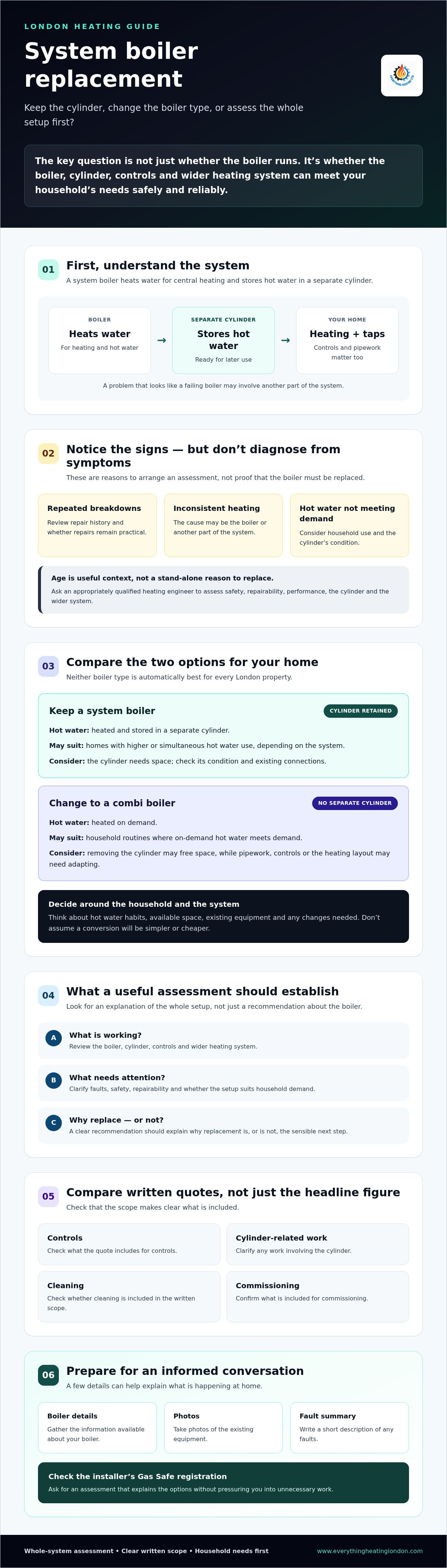
- A system boiler heats water for storage in a separate cylinder, so replacement decisions should account for how your home uses hot water.
- Compare a like-for-like replacement with a change of boiler type, considering household demand, available space and any work needed to adapt the system.
- For system boiler replacement London quotes, compare the written scope, not just the headline figure. Check what’s included for controls, cylinder-related work, cleaning and commissioning.
- Before enquiring, gather your boiler details, photos and a short description of any faults to help explain what’s happening.
- A clear assessment should establish whether the boiler, cylinder and wider heating system suit your household’s needs.
System boiler replacement in London: how the system works and when to consider it
Deciding whether to replace a boiler can feel unclear when it still works some of the time. A system boiler heats water for central heating and hot water stored in a separate cylinder. The boiler, cylinder, controls and pipework work together, so a problem that looks like a failing boiler needs assessment before replacement is recommended. For a simple overview of how central heating systems work, consider how heat moves from the boiler through the home.
For a system boiler replacement London assessment, the key question isn’t just whether the boiler runs. It’s whether the complete setup can meet your household’s needs safely and reliably.
What makes a system boiler different from a combi boiler?
A system boiler works with a separate hot water cylinder, which stores heated water for later use. This arrangement can suit households that use hot water in several places or need a ready supply for more than one bathroom. The amount of stored hot water is finite, though, and the cylinder takes up space.
A combi boiler heats water on demand, without a separate hot water cylinder. That can free up space, but the right option depends on household demand, existing equipment and the changes needed to the heating system. Neither type is automatically best for every London property.
Which signs suggest it is time to assess replacement?
Repeated breakdowns, inconsistent heating or hot water that no longer meets household demand are reasons to arrange an assessment. They don’t prove the boiler needs replacing. A fault may be repairable, or the cause could involve the cylinder, controls or another part of the system. Don’t rely on symptoms alone to diagnose the problem.
Age is useful context, but it isn’t a stand-alone reason to replace a boiler. Consider its repair history, current performance and whether parts or repairs remain practical. Ask an appropriately qualified heating engineer to assess the boiler, cylinder and wider system, including safety and repairability, before recommending replacement.
This whole-system view matters because a new boiler won’t necessarily resolve problems caused elsewhere. A clear assessment should explain what appears to be working, what needs attention and why replacement is or isn’t the sensible next step.
Keep a system boiler or switch type? Compare the options for your home
A replacement doesn’t have to be a like-for-like swap. You could keep a system boiler and retain the hot water cylinder, or consider changing to a combi boiler. The right choice depends on how your household uses hot water and whether the existing cylinder, pipework and controls are suitable. A heating engineer should assess the whole setup before recommending a change.
| Consideration | Keep a system boiler | Change to a combi boiler |
|---|---|---|
| Hot water | Heats water stored in a separate cylinder. | Heats water on demand, without a cylinder. |
| Household demand | May suit homes with higher or simultaneous hot water use, depending on the system. | May suit routines where on-demand hot water meets household needs. |
| Space | Requires room for the cylinder. | Removing the cylinder may free up space. |
| System changes | Existing connections and cylinder condition need checking. | Pipework, controls and the heating layout may need adapting. |
Boiler type should match the home’s hot water use and existing system. That’s a useful starting point for comparing options, rather than choosing based on boiler type alone.
When might keeping a system boiler be the practical choice?
If people often use hot water at the same time, retaining a cylinder may be worth discussing with an engineer. The cylinder’s condition matters too. A suitable, sound cylinder may be practical to keep, while a damaged or unsuitable one could affect the recommendation. Consider your household routine and whether you have space for the cylinder, not just the boiler location.
What should you check before changing to a combi boiler?
Think through your daily hot water habits. Would removing stored hot water work for everyone in the household? Ask the engineer to explain any proposed changes to pipework, controls and the heating layout, and whether the cylinder can be removed without other work. Don’t assume conversion will be simpler, cheaper or more efficient. That depends on the property and the system’s condition.
For system boiler replacement London options, ask for the reasons behind each recommendation, including what happens to the cylinder and existing controls. The Chartered Institute of Plumbing and Heating Engineering provides background on the plumbing and heating profession. You can also explore boiler installation information from Everything Heating Ltd and ask about an assessment of your current setup.
What happens during a system boiler replacement in London?
A well-planned replacement starts with the existing setup, not just the boiler itself. The cylinder, controls, pipework, access and relevant safety requirements can all affect the work. If you’re comparing options for system boiler replacement London, ask the engineer what they’ve assessed and why the proposed work is needed.
The process varies by property and agreed scope, but these are the main stages to expect:
- Initial discussion. Describe the boiler’s symptoms, any recurring faults and how your household uses heating and hot water. Share relevant boiler details if you have them.
- System assessment. The engineer reviews the boiler and cylinder together, along with controls, visible pipework and the wider heating system. They should also consider access and the flue position.
- Written scope. Before agreeing to work, ask for a written description of what will be replaced, retained or altered. It should identify any cylinder-related work, changes to controls or pipework, and what is not included.
- Installation and checks. Work should follow the agreed scope. Ask how the installer will test the new setup and check that it operates as intended.
- Handover. Ask for a demonstration of the controls and confirm which commissioning records and customer paperwork you’ll receive. Requirements can depend on the installation, so check what applies to your job.
What should the initial survey assess?
Explain what happens at home, not just what the boiler is doing. Mention if hot water runs short, heating is uneven or controls are difficult to use. The engineer should consider the cylinder’s condition and suitability, the controls and visible pipework, as well as access and flue position. These details help make the written scope specific to your property. For general background on how a system boiler works, Energy Saving Trust explains common boiler types and their differences.
What should installation and handover include?
Ask what removal and replacement work is included, and whether the cylinder or other parts of the system will be changed. Don’t assume alterations or cleaning are part of the job unless the written scope says so. After installation, the engineer should explain how operation will be checked and show you how to use the controls. Confirm which records and documents will be provided rather than assuming particular paperwork is included.
For broader installation context, read this boiler installation guide for West London. It can help you prepare questions about the proposed work before discussing your own system.
How to compare London system boiler replacement quotes
A useful quote explains the work planned for your home. For system boiler replacement London, compare written scopes side by side rather than relying on the headline figure. Access, the condition of existing equipment and any requested changes can affect what’s involved, so two quotes may cover different work.
Questions to ask before accepting a replacement quote
Check that each quote makes clear what equipment and labour it covers. Ask whether the existing cylinder and controls will stay, be altered or be replaced. Confirm whether system cleaning and commissioning are included, and what is excluded.
Use this checklist to spot gaps:
- Boiler: Is the proposed replacement clearly specified?
- Cylinder: Is it being retained, changed or left outside the quoted work?
- Controls and pipework: Are changes described, or assumed to be unnecessary?
- Cleaning and commissioning: Does the scope say what will be done and checked?
- Additional work: How will unexpected issues be explained and approved before proceeding?
- Handover: Who handles any relevant notifications, and what records or paperwork will you receive? Confirm the arrangements for your installation with the installer.
For broader context on assessing what installation work may involve, see this UK boiler installation cost guide. Use it to help think about scope, not as a replacement cost source or a substitute for a quote based on your home.
How to check installer competence and clarity
Before accepting a quote for gas boiler work, check that the engineer’s Gas Safe registration is current and covers the work being undertaken. A clear recommendation should explain why it suits your system, without pressuring you to decide before you understand the details.
Look for written assumptions, exclusions and a process for getting your approval if extra work is needed. Customer reviews can help you assess communication and service, but they don’t confirm an engineer’s credentials or show whether a quote covers your cylinder, controls and other system-specific work. Check those points directly.
If you’re ready to discuss your existing setup, request a boiler installation assessment and ask for a clear explanation of the proposed scope.
Arrange a system boiler replacement assessment with a London heating engineer
The next step is to establish whether the boiler, hot water cylinder and wider heating system still suit your household. A system boiler replacement London enquiry doesn’t mean you’ve already decided to replace it. An assessment can help clarify whether repair, replacement or further investigation is appropriate.
What information should you have ready?
A few practical details can make the first conversation clearer. Gather what you know, but don’t remove covers or attempt repairs yourself.
- Boiler details: Note the make and model, plus any fault information shown on the display.
- Symptoms: Explain when the problem occurs and whether it affects heating, hot water or both. Mention if hot water runs short or the issue comes and goes.
- System layout: Describe where the hot water cylinder is and whether access to the boiler or cylinder is restricted.
- Photos and history: Take clear photos of visible equipment and controls if safe to do so. Include any previous system work you know about.
These details won’t diagnose the fault, but they can help the engineer understand the setup before assessing it in person.
What to expect from the next conversation
Explain how the system behaves and what your household needs from its heating and hot water. The engineer can assess the boiler alongside the cylinder and wider system, then explain whether repair, replacement or further investigation appears appropriate. If changes are recommended, ask why they’re needed and request a clear written scope before agreeing to work.
Everything Heating Ltd provides boiler installation in London. When you enquire, ask whether it undertakes system boiler replacements in your area and what assessment arrangements apply. This keeps the conversation specific to your property without assuming replacement is necessary or promising a particular outcome.
Before you enquire, have your notes and photos ready. Consider what you want clarified, such as the cylinder’s condition or a recurring heating issue. A clear assessment should help you understand the options and decide what to do next.
Discuss a system boiler replacement assessment with Everything Heating Ltd.
Make your next step a clear assessment
The right replacement decision starts with the whole heating setup. Check whether the boiler, cylinder and wider system still meet your household’s needs, then compare written scopes to understand what each installer proposes. A repair may be appropriate, or replacement may make sense after assessment.
For system boiler replacement London, Everything Heating Ltd offers boiler installation and is described as Gas Safe registered. Confirm its current registration, whether it undertakes system boiler replacements and whether it covers your area when you enquire.
Prepare your boiler details and a brief description of the symptoms, then ask for a clear explanation of the recommended work. Discuss your system boiler replacement with Everything Heating Ltd and take the next step with a better understanding of your options.
Frequently Asked Questions
How long does a system boiler replacement take?
There isn’t one fixed timescale. It depends on the agreed work and the property. A like-for-like replacement may involve different work from a job that changes pipework, controls or the cylinder. Access and the condition of the existing system can also affect the schedule. For system boiler replacement London enquiries, ask the installer what work is planned, how long they expect it to take and whether anything could change that estimate.
Can I replace a system boiler without replacing the hot water cylinder?
Yes, the cylinder may be retained if an engineer finds it suitable and in sound condition. It should be assessed alongside the boiler rather than assumed to be reusable or automatically included in the replacement. Ask the installer to state in writing whether the cylinder will remain, be altered or be replaced, and why. Its condition, capacity and fit with your household’s hot water needs all matter.
Is a system boiler better than a combi boiler for a London home?
Neither type is automatically better for every London property. A system boiler heats water for storage in a separate cylinder, which may suit households with higher or simultaneous hot water use. A combi heats water on demand and doesn’t need a separate cylinder. Consider household routines, available space, hot water demand and existing equipment. An engineer can assess these factors before recommending whether to retain the system or change boiler type.
Do I need a Gas Safe engineer to replace a gas system boiler?
Yes. Gas boiler installation must be carried out by a Gas Safe registered engineer. Before agreeing to work, check the engineer’s current registration and confirm it covers the work they’ll undertake. Don’t rely on a company name or online review alone as proof. For a replacement in London, ask who will carry out the gas work and what checks and paperwork will follow the installation.
What should a system boiler replacement quote include?
A quote should clearly describe the proposed boiler, labour and work covered. Check whether it includes or excludes cylinder-related work, controls, pipework changes, system cleaning, commissioning and removal of existing equipment. It should also explain any assumptions and how extra work will be raised for your approval. Compare written scopes, not just headline figures, because access and existing equipment can mean quotes cover different work.
Can a system boiler replacement improve hot water supply?
It may help if the existing boiler or another part of the system is contributing to poor hot water performance, but replacement alone can’t guarantee an improvement. The cylinder, its suitability, controls and household demand also affect the result. Explain whether hot water runs short, takes too long to heat or is inconsistent. Ask the engineer to identify the likely cause and explain how the proposed work is expected to address it.
What happens to the existing heating controls during replacement?
They may be kept, adjusted or replaced, depending on their condition, compatibility and the planned installation. Don’t assume new controls are included or that existing ones can be reused. Ask the installer to assess them and state clearly in the written scope what will happen. After the work, request an explanation of how to use the controls, including how to set heating times and manage hot water if your system provides that control.


