

A "fixed price" quote for a new boiler shouldn't come with a list of surprises once the engineer starts the job. You've likely spent the morning deciphering vague estimates from national companies or worrying about the true new boiler installation cost UK homeowners are facing in 2026. It's stressful to feel like you're being kept in the dark about the final bill. You want a warm home and a reliable system, not a headache over hidden extras like power flushing or flue upgrades that weren't mentioned during the initial conversation.
We've put together this straight-talking guide to give you the clarity you deserve. We'll break down the current market rates for combi and system boilers, whilst explaining why London properties often carry a 20 to 30 percent premium. You'll learn about the specific technical factors that dictate your costs, from smart thermostat integration to managing the logistical hurdles of parking and access in the capital. This is about more than just a new unit; it's about securing a reliable, A-rated heating system for the next 15 years with a transparent, fixed-price approach you can trust.
Key Takeaways
- Learn why hardware-only prices are misleading and how to budget for a complete installation that includes all necessary components.
- Discover how the new boiler installation cost UK homeowners pay is influenced by boiler type and the technical complexity of system conversions.
- Uncover the London premium and how logistical factors like parking permits and ULEZ charges impact the final quote for properties in the capital.
- Identify the essential extras, such as power flushing and magnetic filters, that are critical for system longevity and keeping your manufacturer warranty valid.
- Understand the difference between local experts and national chains to help you avoid corporate markups and confusing financing gimmicks.
Understanding New Boiler Installation Costs in the UK for 2026
The UK heating market has seen significant shifts as we move through 2026. While the proposed ban on gas boilers for existing homes was dropped, the focus has moved sharply toward high-efficiency, future-proofed technology. This shift affects the overall new boiler installation cost UK homeowners should expect to see. It's no longer just about swapping a white box on the wall. It's about integrating a sophisticated piece of tech into your wider central heating systems to ensure long-term savings and compliance with modern energy standards.
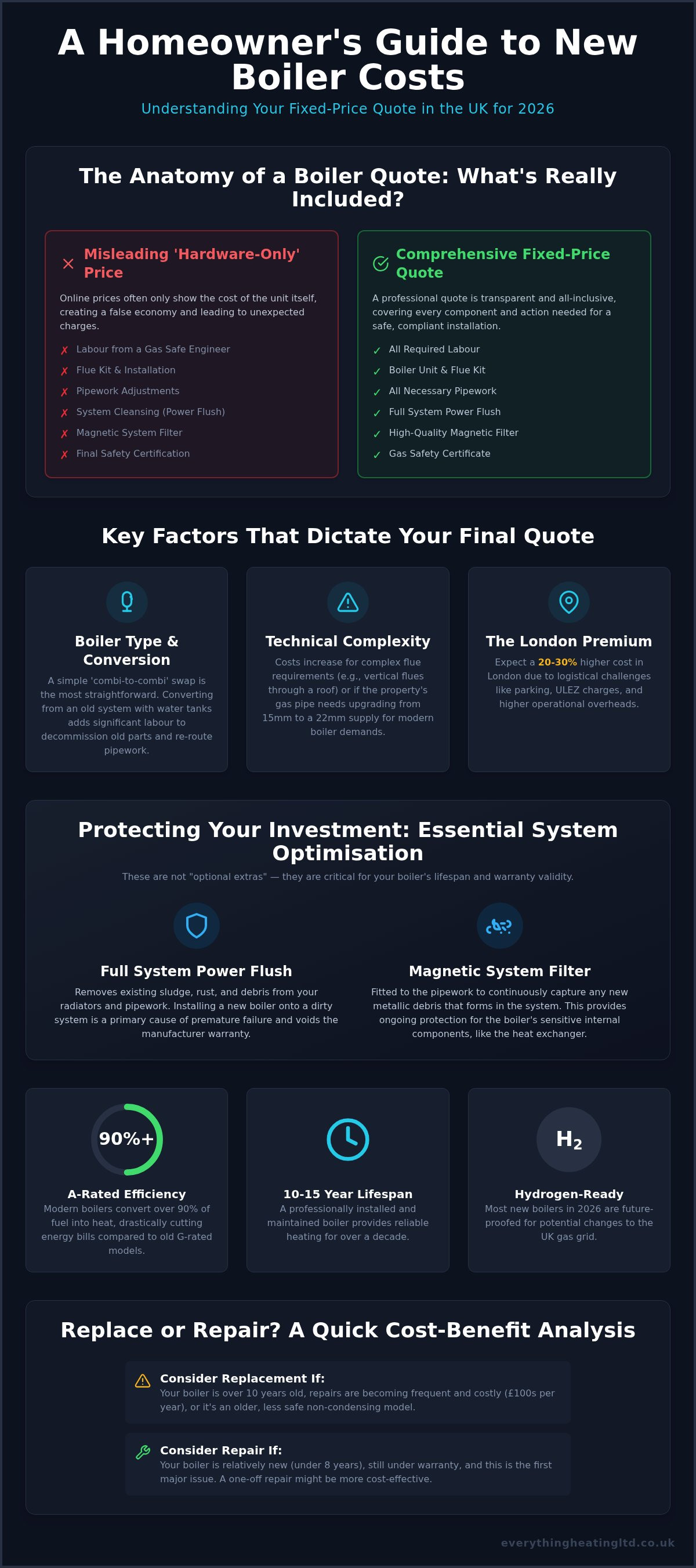
A common point of confusion is the gap between hardware-only prices seen online and a professional full installation quote. You might see a boiler unit alone advertised at a tempting price, but that figure doesn't include the Gas Safe engineer's labour, the flue kit, internal pipework adjustments, or the mandatory system cleansing. A professional quote covers everything from the initial site survey to the final Gas Safety certificate. If a quote seems suspiciously low, it's usually because these essential elements have been stripped out to make the headline price look better.
Choosing the lowest estimate often creates a false economy. Budget installers might skip the power flush or use generic magnetic filters that don't catch all the debris. This leads to sludge building up in your brand-new heat exchanger within months. The result is frequent repairs and a voided manufacturer warranty. Investing in a quality installation now prevents catastrophic failures that could cost thousands later. Modern A-rated boilers operate at over 90% efficiency. Upgrading from an old G-rated model can significantly reduce annual energy bills, often paying for the difference in installation quality within just a few years.
The Price Range for Different Boiler Models
The market is split between budget-friendly units and premium brands. When you pay more upfront, you're usually buying a longer manufacturer warranty, sometimes up to 12 years of coverage. Premium models also feature better modulation ratios. This means the boiler can turn its power down very low rather than constantly switching on and off. It saves gas and reduces wear on internal components. By 2026, most new units are hydrogen-ready, ensuring your home is prepared for future changes to the UK gas grid without needing a complete system overhaul.
When to Replace vs Repair: The Cost-Benefit Analysis
There comes a tipping point where keeping an old boiler alive is no longer logical. If you're spending hundreds of pounds every winter on call-outs and replacement fans or pumps, that money is better spent on a new installation. Safety is another major factor. Older, non-condensing boilers are more prone to cracks in the heat exchanger, which can lead to carbon monoxide risks. A modern condensing boiler has an average lifespan of 10-15 years. If your current unit is approaching this age, a proactive replacement is usually the most cost-effective path to avoid an emergency breakdown in mid-winter.
The Technical Breakdown: How Boiler Type Dictates Price
The type of boiler you choose is the single biggest variable in your final quote. It isn't just about the price of the metal box. It's about the labour required to integrate it into your home. A straightforward swap, where we replace an old combi with a new one in the same spot, is the simplest job. However, switching boiler types is a different story. If you're moving from an old-fashioned system with tanks in the loft to a modern combi, the new boiler installation cost UK homeowners face will rise. This is because we must decommission the old cylinders, reroute pipework, and ensure the new system can handle mains water pressure.
The flue also plays a major role in the technical difficulty. Most boilers use a horizontal flue that goes straight through an external wall. It's quick and cost-effective. If your boiler is located in the centre of the house, you'll likely need a vertical flue that exits through the roof. This requires specialist roofing work and more expensive flue components. Another common technical hurdle is the gas pipe. Many older UK properties have 15mm copper pipes. Modern high-efficiency boilers usually require a 22mm supply to function safely at full power. Upgrading this pipework from the meter to the boiler is a standard requirement that ensures your new system won't cut out when you need it most.
Combi Boilers: The Cost-Effective All-Rounder
Combi boilers are the most popular choice for London’s apartments and smaller terrace houses. They heat water directly from the mains, so you don't need a bulky hot water cylinder or a cold water tank in the loft. They are generally the most affordable to install because the system is self-contained. While they save a huge amount of space, they do have limits. A combi boiler might struggle to provide enough hot water if two or three showers are running at the same time in a larger property. Getting a tailored plan for your boiler installation ensures you don't overspend on a system that doesn't fit your lifestyle.
System and Conventional Boilers for Larger Homes
Larger properties with high hot water demand usually require a system or conventional boiler. These units work alongside a separate hot water cylinder. An unvented cylinder is a common modern upgrade because it delivers high-pressure hot water to multiple taps simultaneously. The Energy Saving Trust guide highlights how choosing the right system is crucial for long-term home efficiency. These setups are also the preferred choice for underfloor heating integration. They provide the consistent, high-volume flow needed to heat large floor areas effectively without straining the boiler.
The London Premium: Why Location and Property Type Matter
The new boiler installation cost UK residents see in national brochures rarely reflects the reality of the London market. In 2026, the "London Premium" remains a significant factor. Average labour rates in the capital currently hover around £57 per hour, which is often double the rate found in northern regions. This isn't just about higher wages; it's about the sheer cost of doing business in one of the world's most congested cities. When an engineer arrives at your door, their quote includes the operational reality of navigating the capital's streets.
Logistics play a massive role in your final bill. A standard installation in central or West London often involves a £15 daily Congestion Charge and a £12.50 ULEZ fee if the engineer's vehicle isn't compliant. Parking is another major hurdle. In many boroughs, a tradesperson's parking permit can cost between £20 and £40 per day. These aren't hidden fees designed to catch you out. They are fixed costs that local experts must account for to ensure they can legally and safely access your property for the duration of the job.
Property age also dictates the technical difficulty. London is famous for its Victorian and Edwardian terraces. These homes were built long before modern boiler installation standards existed. We often find ourselves working with thick lath-and-plaster walls, narrow cupboard spaces, and old iron pipework that requires delicate handling. Access issues in high-rise apartments or basement plant rooms add further complexity. Moving a heavy 40kg boiler up four flights of stairs without a lift isn't just a physical challenge; it's a labour-intensive process that requires two engineers rather than one.
Expert Boiler Installation in West London Property Types
Working in areas like Greenford and Uxbridge requires specific local knowledge. The water pressure in West London can vary wildly between street levels. This affects how a combi boiler performs under load. Local experts understand the local gas infrastructure and can anticipate whether your street's supply can handle a high-output boiler. Choosing a local heating engineer means you're getting someone who knows the common quirks of your specific property type, leading to a faster, more reliable setup.
Compliance and Safety in the Capital
Safety is the only area where you should never look for a bargain. Gas Safe registration is a non-negotiable legal requirement for any installation in the UK. Beyond the physical work, your installer must notify the local council to comply with building regulations. For landlords, this process is even more critical. We often integrate the initial installation with a Gas Safety Certificate (CP12) to ensure the property is legally let from day one. This documentation is your proof that the system is safe, efficient, and installed to the highest professional standards.
Hidden Extras and System Optimisation Costs
A headline quote for a new boiler often ignores the technical components that keep the system running beyond the first year. When you're calculating the new boiler installation cost UK homeowners actually pay, you have to look past the boiler unit itself. These "extras" aren't optional luxuries; they're essential for system health. Skipping them to save a few pounds today usually leads to a much larger bill in three years when the heat exchanger blocks up or the pump fails. Transparency means including these items in the initial quote so there are no surprises on the day of the job.
London's water is notoriously hard, which creates a specific set of challenges for modern boilers. Limescale inhibitors are a non-negotiable requirement in the capital to prevent calcium buildup from choking your new system. Similarly, magnetic filters are a vital safeguard. These devices sit on the return pipework and catch metallic debris (black sludge) before it can enter the boiler's delicate internal components. It's a small investment that prevents catastrophic failures and ensures your central heating remains quiet and efficient.
Power Flushing and System Health
A professional power flush is the most effective way to prepare your radiators for a new boiler. If you're connecting a high-efficiency boiler to old, sludge-filled radiators, you're asking for trouble. A thorough clean can improve thermal efficiency by up to 15 percent, meaning your home warms up faster for less money. Most manufacturers now state that their warranty is only valid if the system was properly cleansed before installation. You can learn more about when to power flush a heating system to see if your radiators are showing the classic signs of blockage.
Smart Controls and Energy Management
Modern "Boiler Plus" legislation requires all new combi boiler installations to include an additional efficiency measure. Smart thermostats like Hive, Nest, or Tado are the most popular choice for meeting these standards. These systems allow for precise modulation, which means the boiler adjusts its flame height rather than just clicking on and off. This reduces gas consumption and extends the life of the burner. For maximum control, you might consider smart TRVs (Thermostatic Radiator Valves). These allow you to set different temperatures for every room in the house, ensuring you aren't wasting money heating an empty guest bedroom.
Investing in these optimisations ensures your system runs at peak performance for its entire 15-year lifespan. If you're unsure which smart controls or filters are right for your property, our team can help you choose the best smart thermostat installation to match your new boiler and lifestyle.
Choosing a Professional Installer Without the Corporate Markup
Deciding who installs your new system is just as important as the model you choose. National chains often lead with massive marketing budgets and celebrity endorsements, but these overheads are inevitably reflected in your final bill. When you look at the new boiler installation cost UK homeowners are quoted by these giants, you're often paying for their call centres and national TV adverts rather than the engineering itself. A local specialist operates with lower overheads and a direct focus on technical excellence in specific areas like Greenford and Uxbridge.
Trust is built through transparency and verified expertise. Before any engineer starts work in your home, you must verify their credentials on the Gas Safe Register. Don't just take their word for it. Ask to see their physical ID card and check the back to ensure they are qualified for the specific type of work required, such as combustion analysis or unvented cylinders. Local experts like Everything Heating Ltd rely on their reputation within the West London community, which means the quality of the installation is the primary priority, not a corporate sales target.
Transparent Pricing vs Financing Gimmicks
The "Interest-Free" offers you see advertised everywhere are rarely as free as they seem. In many cases, the base price of the installation is inflated by 15 to 20 percent to cover the fees the installer must pay to the finance provider. You might not be paying interest, but you are often paying a higher initial new boiler installation cost UK price than necessary. By avoiding these financing distractions, we focus on providing a straight-talking, fixed-price quote based on the actual technical requirements of your home. Owning your system outright from day one means you aren't tied into long-term contracts with hidden premiums baked into the hardware.
Next Steps: Getting Your Bespoke Quote
Getting an accurate quote shouldn't be a complicated process. To make your engineer's site visit as productive as possible, try to have clear access to your current boiler, the gas meter, and your water stopcock. Knowing the age of your radiators and whether you've had issues with cold spots in the past will help us determine if a power flush is essential for your system's longevity. This preparation ensures we can provide a reliable, transparent figure that covers every technical detail from the start.
We believe in providing peace of mind through clarity and honest engineering. If you are ready for a reliable heating system without the corporate fluff, you can get a transparent quote from Everything Heating Ltd today. We'll provide a clear breakdown of the costs specific to your London property, ensuring your home stays warm and efficient for years to come.
Secure Your Home's Efficiency for the Future
Navigating the new boiler installation cost UK market doesn't have to be a guessing game. You now understand how your property type, chosen boiler model, and specific London logistics influence the final figure. By focusing on technical precision rather than financing gimmicks, you're investing in a system that will actually last. Real peace of mind comes from knowing exactly what you're paying for before the first pipe is cut.
Everything Heating Ltd specialises in West London properties, from Greenford to Uxbridge. Our Gas Safe Registered Engineers provide no-nonsense, transparent pricing to ensure you get the best value without hidden markups. We handle every technical detail, including power flushing and smart thermostat integration, to keep your manufacturer warranty protected. Don't leave your home's comfort to chance with vague quotes or corporate sales tactics.
Book your professional boiler installation survey in London today. We're ready to help you build a reliable, efficient heating system that serves your home for years to come.
Frequently Asked Questions
How much does a new boiler installation cost in London in 2026?
London residents typically pay a premium of 20 to 30 percent compared to the national average. This increase is driven by higher labour rates, which currently average around £57 per hour in the capital. You also need to account for logistical expenses such as daily parking permits, ULEZ charges, and Congestion Zone fees that engineers must factor into their quotes.
Is it cheaper to install a combi boiler or a system boiler?
A combi boiler is generally the most cost-effective option because it's a self-contained unit. It doesn't require the external hot water cylinders or cold water tanks that a system boiler needs. This reduces both the hardware costs and the labour time required for pipework. However, the new boiler installation cost UK homeowners pay can rise if you're converting from an old tank-based system to a combi, as this involves significant plumbing changes.
Do I really need a power flush when getting a new boiler?
Yes, a power flush is essential for protecting your investment and is often a mandatory condition of your manufacturer warranty. It removes the black iron oxide sludge that builds up in old radiators. If you skip this step, that debris will quickly settle in your new boiler's heat exchanger, leading to reduced efficiency and potential part failure within the first year.
How long does a standard boiler replacement take to complete?
A straightforward "like-for-like" swap in the same location usually takes one working day. If you're moving the boiler to a different room or converting from a conventional system to a combi, the job will likely take two to three days. Complex installations involving new gas runs or vertical flue exits through the roof may require additional time for scaffolding or roofing work.
Can I install a new gas boiler myself to save on costs?
No, it's illegal to install a gas boiler yourself in the UK. All gas work must be performed by a Gas Safe registered engineer to ensure the system is safe and leak-free. Attempting a DIY installation voids your home insurance, cancels the manufacturer warranty, and can lead to prosecution. It also poses a severe risk of carbon monoxide poisoning or gas explosions.
What is the most energy-efficient boiler for a 3-bedroom house in the UK?
An A-rated condensing boiler with a high modulation ratio is the most efficient choice for a standard family home. These units can turn their output down to match your actual heating demand, which prevents the system from wasting gas by constantly cycling on and off. When paired with smart controls, these boilers can achieve efficiency levels of over 90 percent.
Will a new boiler installation increase my property value?
Yes, a modern boiler is a strong selling point that can improve your property's Energy Performance Certificate (EPC) rating. Buyers value the peace of mind that comes with a reliable heating system and a valid warranty. It suggests the home has been well-maintained and saves the new owner the immediate expense and stress of an upgrade after moving in.
Are there any grants available for new boilers in 2026?
The Boiler Upgrade Scheme (BUS) currently offers grants of £7,500 for those switching to low-carbon heating like heat pumps. There's also a temporary increase to £9,000 available until March 2027 for homes replacing fossil fuel systems in specific conditions. For low-income households, the ECO4 scheme continues to provide support for energy-efficient upgrades, including boiler replacements for eligible applicants.


